Key takeaway: A manufacturer website should work like your best salesperson, not like a printed brochure. Give each type of buyer a clear path, show the product the way it deserves, make it easy to ask for a price or find where to buy, and build it so Google and AI search can read it from day one.
Most manufacturers we talk to have the same problem. The product is great. The factory runs well. The website looks like it was built to prove the company exists, not to sell anything. A buyer lands on it, scrolls through a few product photos, finds no price, no clear next step, and leaves for a competitor whose site simply asks "want a quote?".
This guide is how we approach website design for manufacturers at Cinnaboner. It is based on the sites we build for makers of car parts, paints, cosmetics and equipment, and on the hundreds of manufacturer sites we review every quarter before we reach out to a company.
In short
- Sell, don't just show. Every page needs one clear next step: get a price, buy, find a dealer or book a call.
- Three kinds of visitors. End customers, dealers and engineers or buyers want different things. Give each one their own path.
- Pick your sales model first. Catalog with a quote form, catalog with dealers, or your own online store. The design follows the model, not the other way round.
- Trust is visual. Great product photos, real factory, clear specs and certificates do more than any slogan.
- Plan for search from day one. Clean product pages and structured data bring buyers from Google and from AI assistants like ChatGPT.
Why most manufacturer websites don't sell
When we review a manufacturer's site, the same patterns come up again and again.
The dead end. A buyer can browse the products but has to go and find a dealer to buy or even to see a price. A lot of interest drops off right there. We see this on many of the sites we review.
The catalog in a PDF. Products live in a downloadable file from three years ago. Nobody can search it, Google cannot read it, and it does not work on a phone.
The 11-field form. The only way to get in touch is a long contact form that asks for a fax number. Short forms get far more requests. A name, an email and one line about what you need is enough to start.
The product looks worse than it is. Dark photos shot on a warehouse floor, mismatched backgrounds, no close-ups. For a product that sells on quality, this costs more than any other mistake.
None of this needs a bigger budget to fix. It needs the site to be designed around what the buyer is trying to do.
Who visits a manufacturer website
Most manufacturer sites are built for one imaginary visitor. In reality three very different people show up, and a site that tries to talk to all of them at once usually fails each of them.
The end customer. Someone who wants your product for their car, their home or their workshop. They want to see it, understand it and buy it, or at least know where to buy it. They decide fast and leave fast.
The dealer or distributor. A shop or a reseller deciding whether to carry your line. They look for margins, terms, minimum orders, marketing support and how serious your brand looks to their own customers.
The engineer or buyer. Someone comparing specifications, materials, certificates and lead times. They want a spec sheet in ten seconds and a way to ask for a quote without calling.
Good manufacturing website design gives each of them a visible path from the home page: "Shop" or "Where to buy" for customers, "Become a dealer" for resellers, "Specs and downloads" plus "Request a quote" for engineers and buyers.
9 things every manufacturer website needs
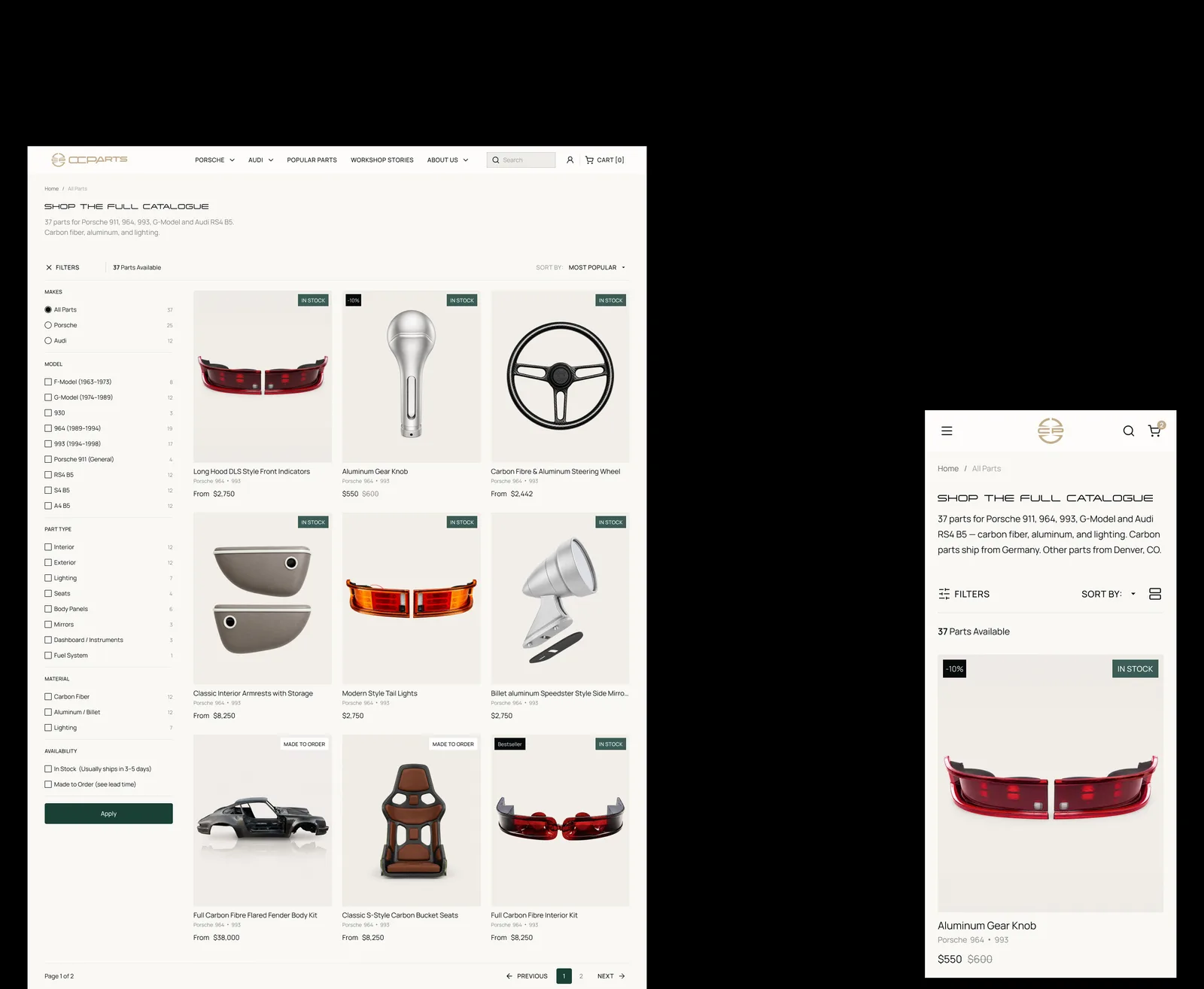
1. A catalog organised the way buyers think. Group products by what they are for, not by your internal codes. Filters for the things people actually choose by: size, material, application, compatible model.
2. A product page that answers the real questions. What is it, what is it for, what are the specs, how much does it cost or where can I buy it. Above the fold, without scrolling through marketing text.
3. A short quote form. Three or four fields, available from every product page. Ask for details later, in the reply.
4. "Where to buy" or a dealer map. If you sell through dealers, make finding one a single click, and send the lead to the dealer so it is not lost.
5. Real cases and reviews. Who uses your product and what changed for them. A short story with a photo beats a page of logos.
6. The factory and the people. Photos and a short story of where and how the product is made. For buyers comparing you with an anonymous import, this is often the deciding page.
7. Certificates and downloads. Spec sheets, installation guides, safety data, certificates. Open, searchable and readable on a phone, not hidden behind a form.
8. FAQ. The questions your sales team answers ten times a week. It saves their time and it is exactly what Google and AI assistants quote in their answers.
9. A way to talk now. A visible phone number, a chat or a booking link. Many of our clients add an AI assistant that answers product questions at night and passes warm leads to the team in the morning.
Not sure what your site is missing?
Send us your link. We will review it and tell you the three things that cost you the most requests, for free.
Three ways a manufacturer can sell online
Before anyone draws a single screen, decide how the site will make money. The design of a quote-driven catalog and of an online store are very different projects.
| Model | Best for | What the site must do |
|---|---|---|
| Catalog + quote request | Custom, heavy or made-to-order products, B2B buyers | Great specs, fast quote form, quick replies from sales |
| Catalog + dealers | Brands that already sell through shops and resellers | Dealer map, leads sent to dealers, support for resellers |
| Own online store | Products people can choose and buy without advice | Prices, cart, delivery and returns, product photos that sell |
Many manufacturers end up with a mix: an online store for popular items, a quote form for large orders and a dealer map for regions they do not serve directly. That is fine, as long as each path is clear on the page. If a store is part of your plan, read our guide to e-commerce for manufacturers.
Two real examples
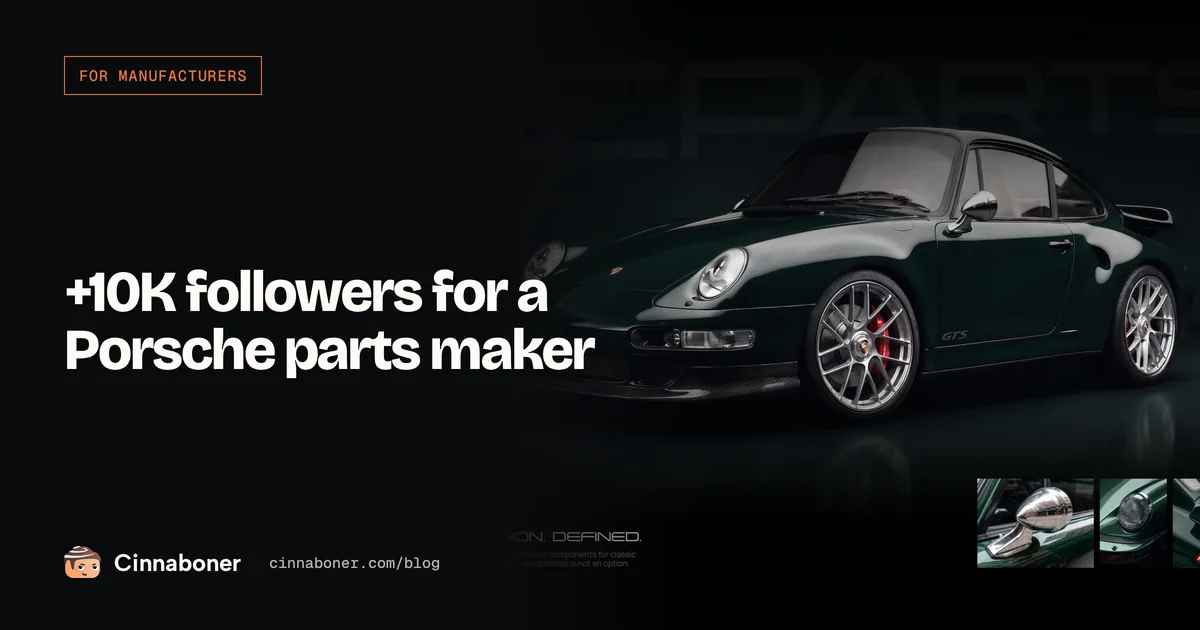
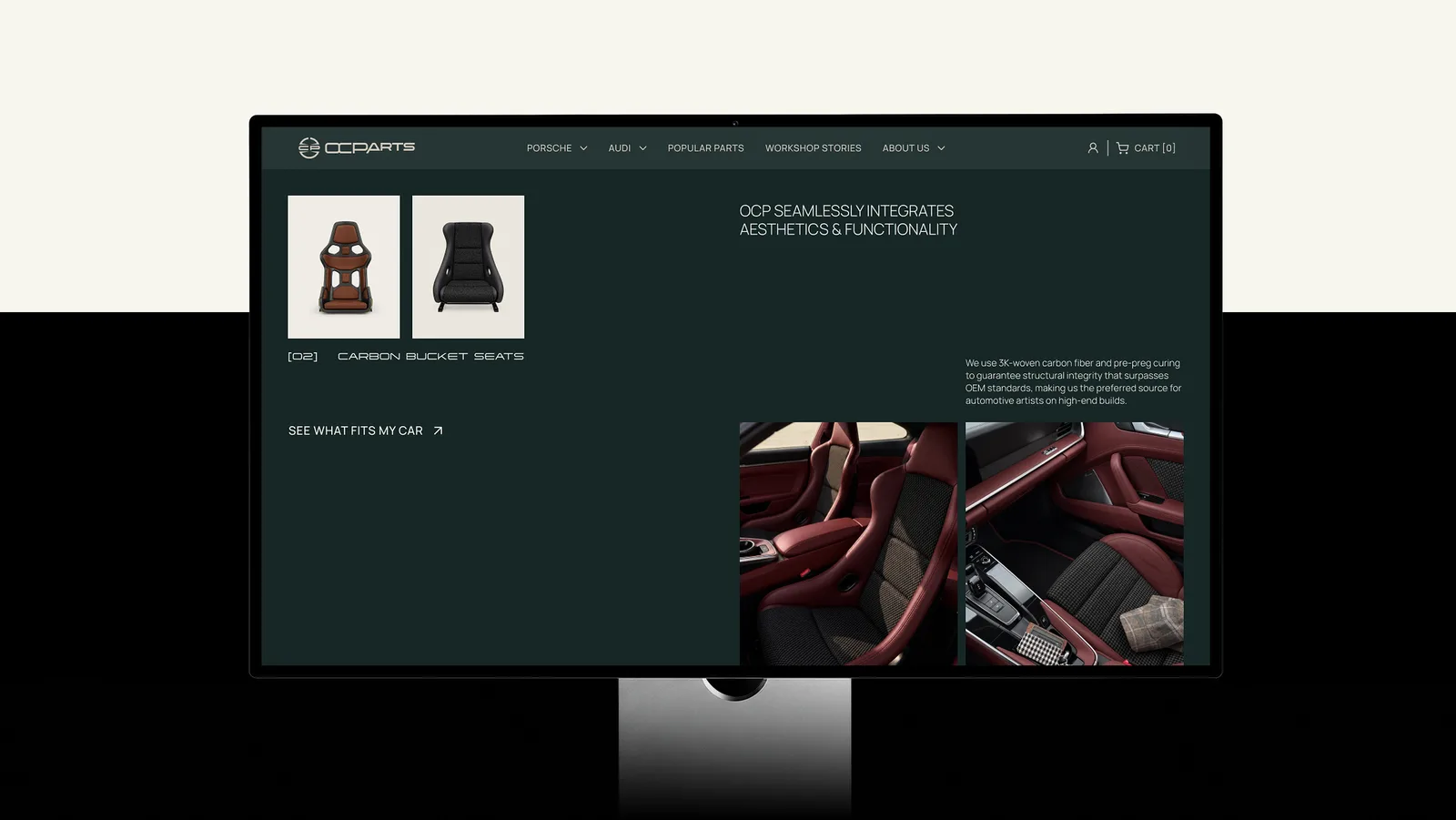
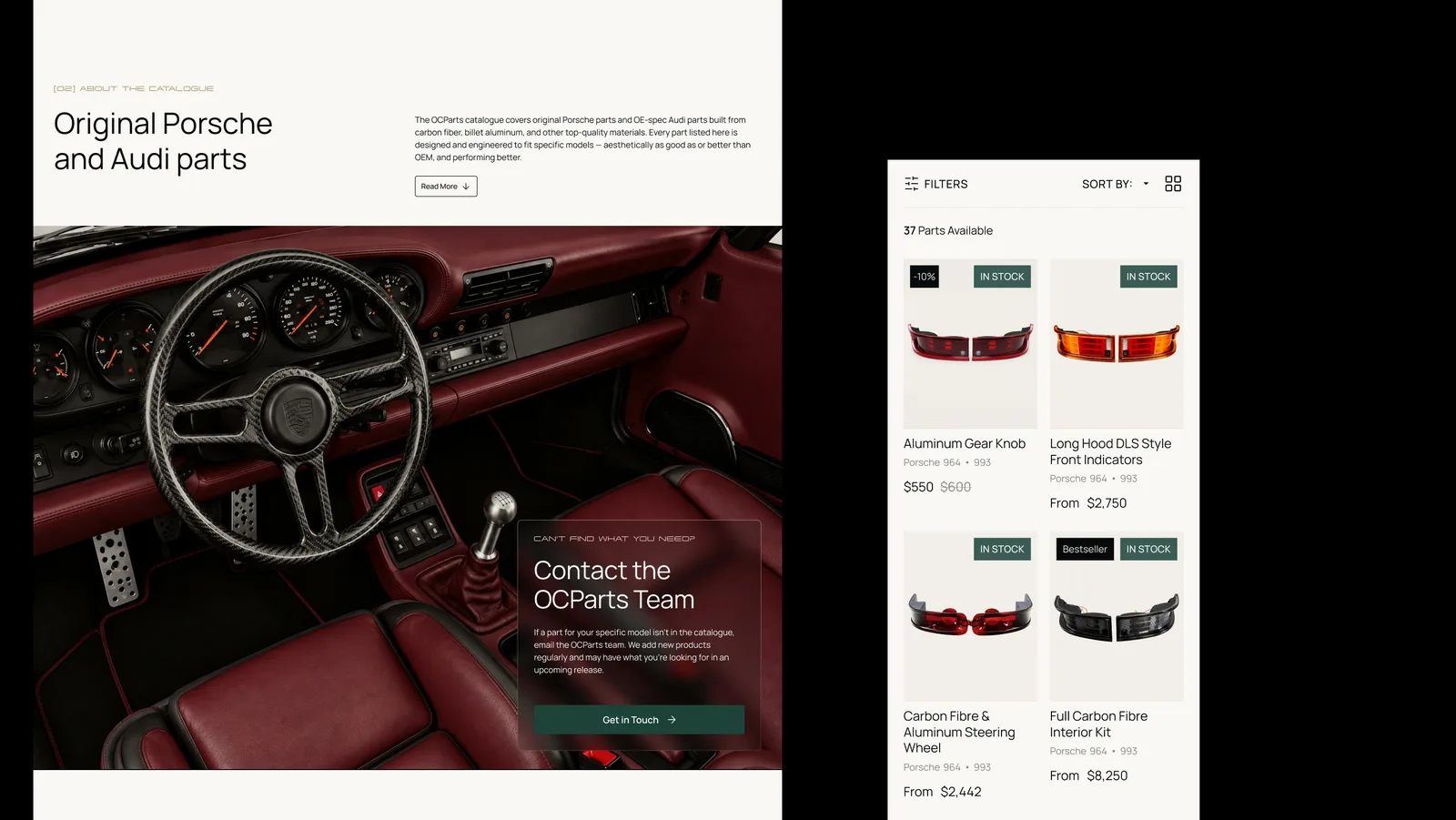
OCParts, Porsche parts maker from California. A strong product presented like a parts list. We rebuilt the brand, the website and the social content: a full catalog with filters and prices, product pages with real photos, and AI visuals that show the parts on the car. In the first three months the new content added over 10,000 Instagram followers, more than 70% of them organic, and brought many times more inbound inquiries than before. Read the OCParts case study.
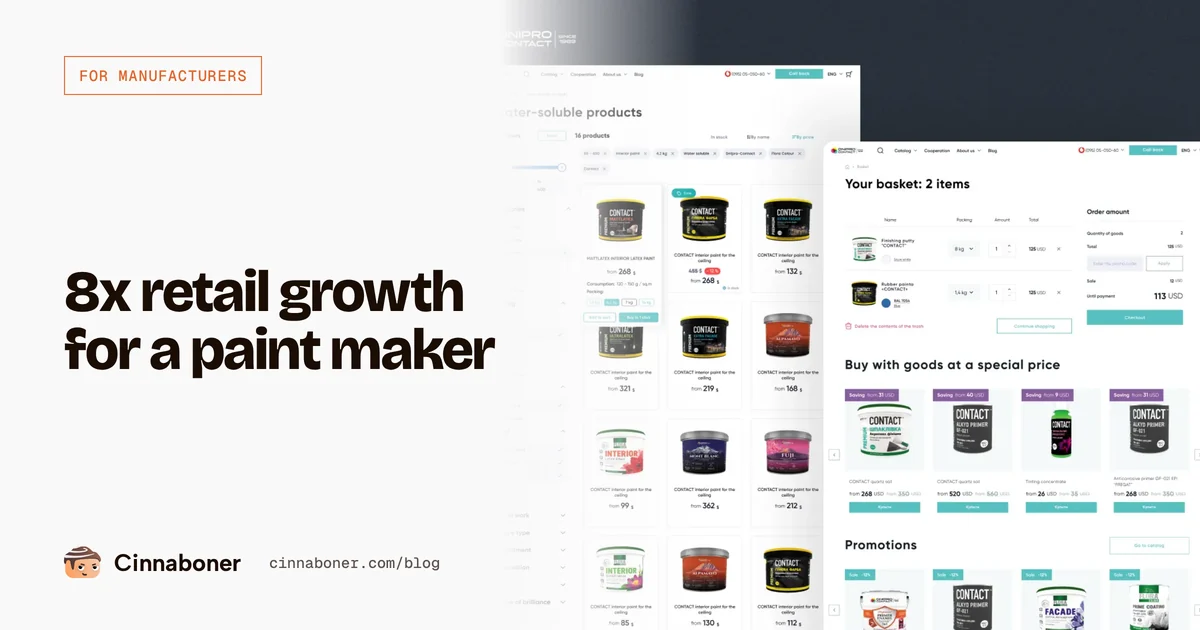
Dnipro Contact, paint manufacturer since 1989. The company sold through dealers with a catalog site that showed products but did not sell them. We built a new brand, packaging and an online store with search optimisation and AI content. In two years retail sales through their own channel grew 8 times. Read how a paint manufacturer went direct to customers and the full brand launch case.
Design that earns trust
Buyers judge the product by the site before they ever touch it. Three things matter most.
Product photography. Consistent light, clean backgrounds, close-ups of the details that justify the price, and the product in use. You no longer need a studio for every item: see how to create product photos for 1,000 items without a studio.
Proof of the real company. The factory, the team, the years in business, the certificates. Real photos, not stock images of handshakes.
Calm, readable layouts. Large type, plenty of space, specs in tables, buttons that look like buttons. A manufacturer site does not need effects. It needs to be easy to use on a phone in a workshop.
Search and AI from day one
Manufacturing topics often have little competition in search, because many manufacturers never invest in it. That makes a well-built site an easy win.
The basics: one page per product or product family, real text instead of PDFs, fast loading, clean titles, and structured data that tells search engines what each page is. The same groundwork makes your products show up when buyers ask ChatGPT, Gemini or Perplexity for a supplier. We cover this in detail in GEO for manufacturers and AI-ready product pages.
How much does a manufacturer website cost in 2026
Prices vary a lot by country and by agency. These are the ranges we see in the market and what you get at each level.
| Option | Typical price | Timeline | What you get |
|---|---|---|---|
| Template site | $2,000 to $5,000 | 2 to 4 weeks | A clean company site, little help with selling |
| Site that sells (catalog, quote or store) | from $5,500 | 6 to 10 weeks | Buyer paths, catalog, product pages, quote flow, SEO basics |
| Full transformation (brand, site, content) | from $12,000 | 2 to 4 months | New brand and packaging, site, photos, launch content |
| Large catalog with integrations | $35,000 and up | 3 to 6 months | Hundreds of products, ERP or CRM links, several languages |
The middle two rows are our own starting prices. See what is included in each package on our page for manufacturers.
15 questions to ask before you redesign
- Who are the three main types of visitors, and what does each one need to do on the site?
- How will the site make money: quotes, dealers, online sales or a mix?
- What is the one action we want on every product page?
- How many requests or sales does the current site bring per month?
- Which products bring the most margin, and are they easy to find?
- Do our photos show the product as well as it deserves?
- Can a buyer find a price or a dealer in under 30 seconds?
- How long is our contact form, and can we cut it in half?
- Are specs and certificates readable on a phone?
- Who on our team replies to requests, and how fast?
- Which questions does sales answer every week, and are they on the site?
- Do we have real stories from customers and dealers?
- Which languages and markets do we need now and next year?
- Who will add new products and news after launch?
- How will we measure success after three months?
Before you ask
In 2026 a template site costs about $2,000 to $5,000, a site built to sell (catalog, quote flow or store) starts around $5,500, and a full brand plus website transformation starts around $12,000. Large catalogs with ERP or CRM integrations and several languages usually start at $35,000.
Six to ten weeks for a site that sells with a catalog and quote or store flow. Two to four months if the brand, packaging and product photos are redone at the same time.
It depends on the product. If buyers can choose without advice, an online store adds a profitable channel. If products are custom or heavy, a catalog with a quote form works better. Many manufacturers combine both and keep a dealer map for other regions.
A catalog grouped the way buyers think, product pages with specs and a clear next step, a short quote form, where to buy or a dealer map, case studies, a page about the factory and team, certificates and downloads, an FAQ and a visible way to contact sales.
Yes. Manufacturing searches often have little competition, so a well-structured site can rank quickly. Product pages with real text and structured data also make your products appear when buyers ask AI assistants like ChatGPT for suppliers.
Turn your site into your best salesperson
Book a 30-minute call. We will look at your current site together, name the biggest leaks and tell you what a rebuild would cost.