Key takeaway: For a high-ticket Porsche parts brand, the barrier was the presentation, not the product. A new identity, a richer mix of product photography and precise AI visualizations, a rebuilt e-commerce site and one social format that worked from the first post added over 10,000 Instagram followers in three months, more than 70% of them organic, and brought many times more inbound inquiries.
OCParts makes aftermarket parts for classic Porsches. Carbon fiber body kits, bucket seats, interior kits, front indicators, precision-milled trim. These parts go on cars worth six figures. Behind them is a globally distributed design, engineering and production team.
We first worked together on a small SEO project for the old site. When we came back with a broader set of marketing, design and development capabilities, the case for a rebrand was obvious. A luxury product whose presentation didn't yet match it.
Project snapshot
- Client: OCParts, aftermarket parts for classic Porsche and Audi, California
- Starting point: No consistent visual system, a cart that wasn't flexible enough for B2B orders
- Our scope: Brand identity, event identity and booth, AI visualizations alongside real product photography, social strategy and content, AI video, e-commerce website with an AI assistant
- Timeline: About 90 days for the rebrand and social relaunch, new site live on October 12, 2026
- Result: +10,000 Instagram followers in three months, more than 70% organic
The situation: the product was never the problem
The parts were excellent. The presentation undersold them at every touchpoint.
- Instagram had no consistent visual system, so the feed didn't read as premium.
- The old website did take online payments, but the cart flow wasn't always clear and wasn't flexible enough for B2B sales, which pushed a lot of orders into direct invoicing. UX and structure needed work too.
- Nothing separated a $40 bolt-on part from an $8,000 carbon seat. That matters a lot when a buyer is deciding whether to trust you with a five-figure build.
Who we were talking to
Before touching a single asset, we mapped the buyers. Porsche aftermarket parts serve very different people, and they don't share the same fears.
- Builders, professionals assembling cars for clients. Burned before by parts that arrive late or don't fit cleanly.
- Visionaries, owners doing full custom builds. They need parts good enough not to compromise a build they have sunk real money into.
- Up-Levelers, collectors modernizing tastefully. They want jewelry for a classic car without ruining its character.
- Car Makers, boutique brands building their own model lines. Supply reliability matters to them as much as part quality.
Across almost every group the same three fears kept coming up. Will this fit. Is this supplier legitimate. Am I about to waste a lot of money. The brand had to answer those questions before a prospect ever asked them.
1. The identity
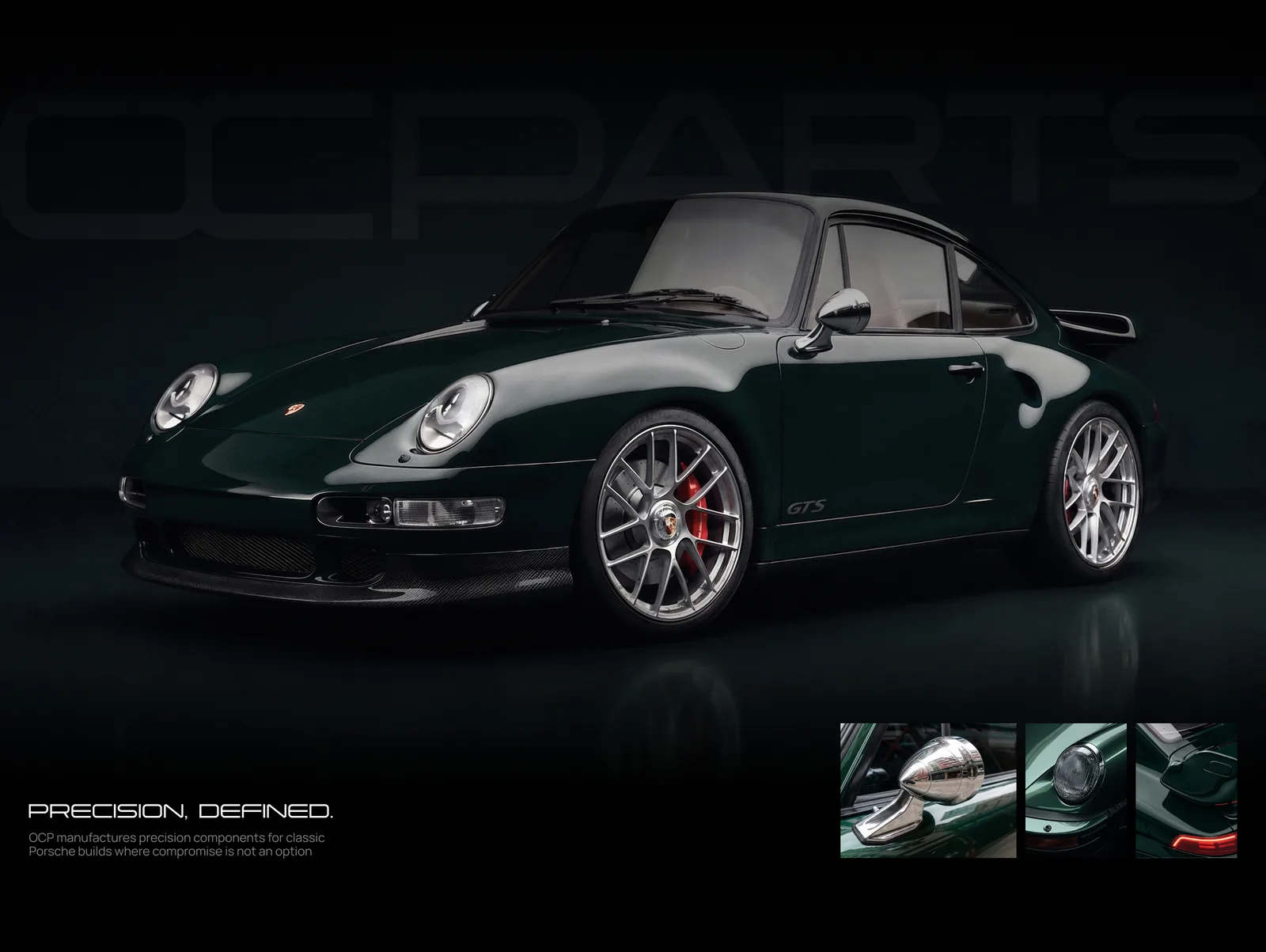
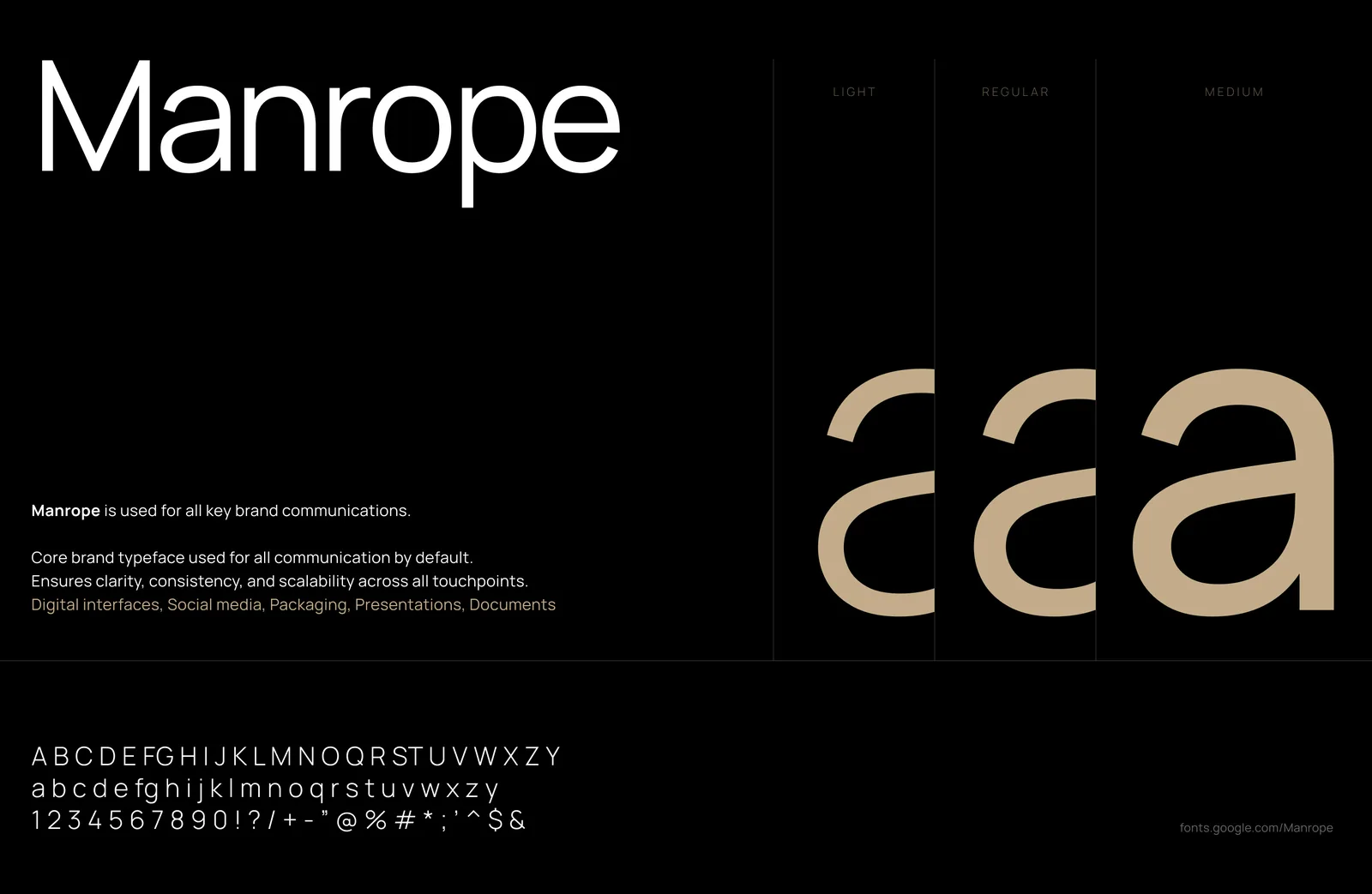
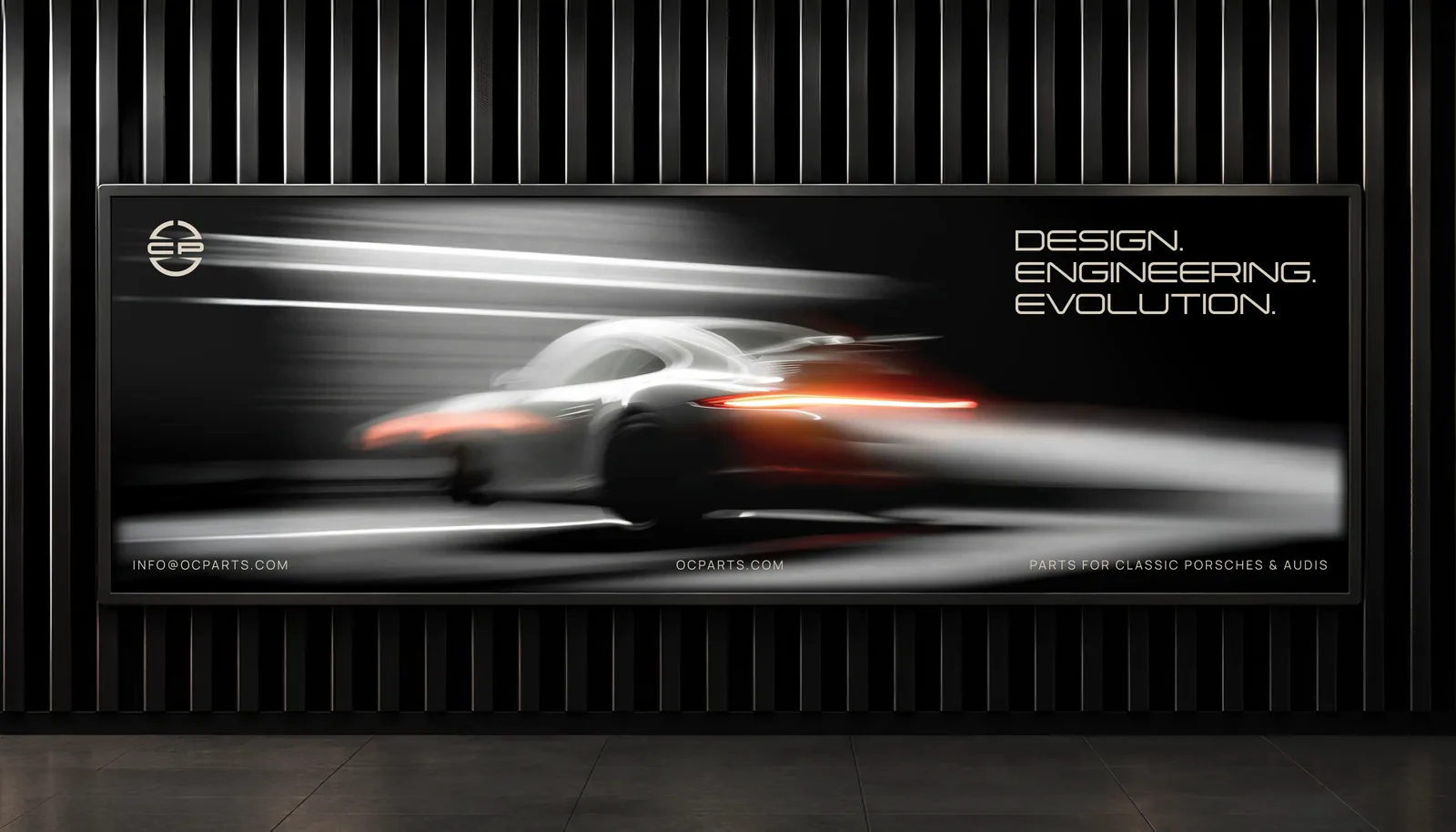
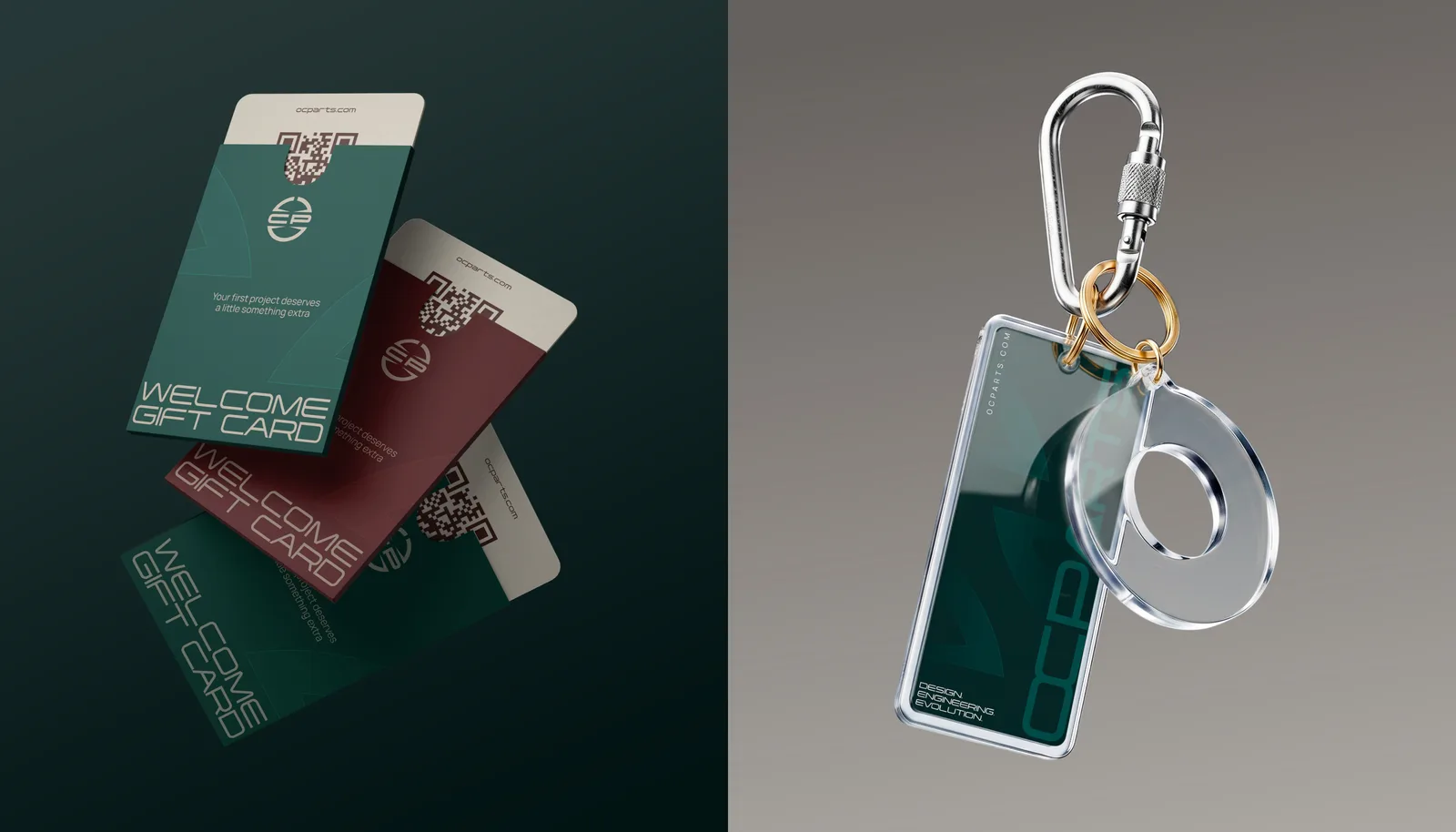
The old logo was a steering wheel with heavy shadows and a muddy green gradient. The owner wanted to keep the steering wheel, so we kept the form and redrew it as a clean line mark in gold and beige, with a new wide wordmark. Around it we built a visual system that says engineered, not aftermarket: deep green and burgundy, a technical display face for headlines and a quiet sans for everything else.

2. Air|Water, on a tight deadline
Much of the work was pulled forward by Air|Water 2026 (April 25, Costa Mesa, California), Southern California's largest single-marque Porsche event with 50+ exhibitors. On a compressed timeline we delivered the identity, the booth, cards and a refreshed Instagram, so the brand looked like it belonged in that room. The owner came back with a stack of leads and contacts. We filmed behind the scenes at the event and turned it into Stories and Reels.
3. Real photography plus precise AI visualizations
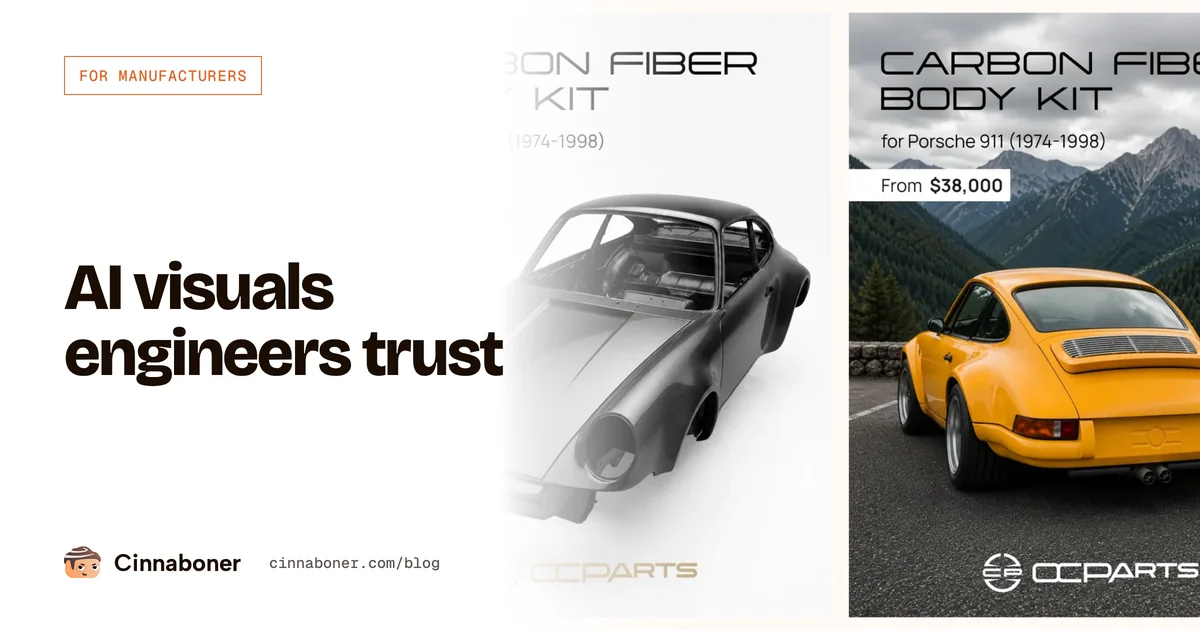
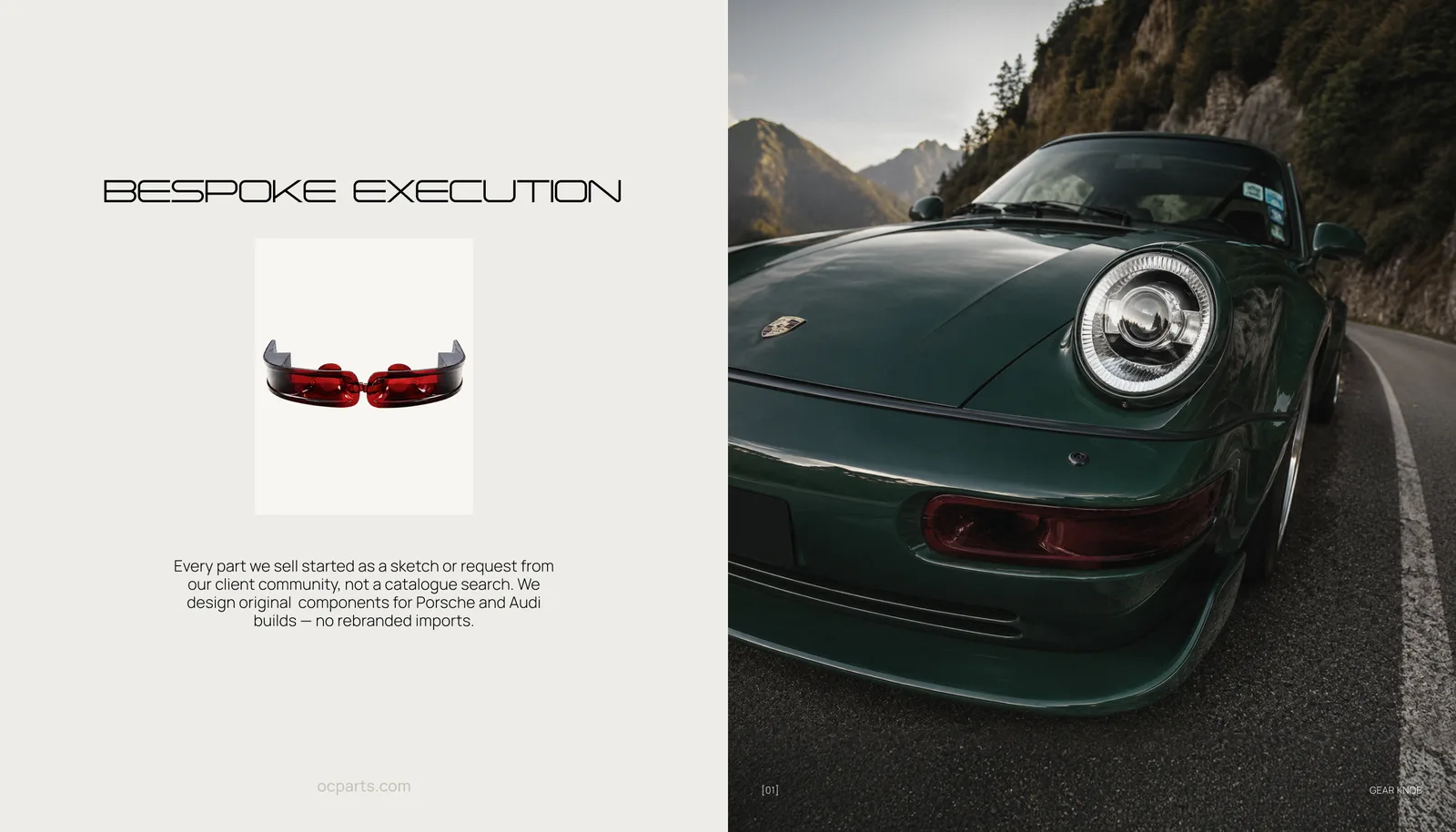
The site's imagery is a blend of shop and professional product photos and real client cars. We added AI visualizations that place OCParts' real products in different environments, so customers can picture a part on their own build, at a far lower cost than on-site shoots with exotic cars.
AI is good at pretty and bad at exact. It often gets shape and geometry wrong, and for this audience a wrong curve on a carbon panel is a dealbreaker. So we work to a hard rule.
- We only show the client images we would rate 9 out of 10 or higher. More than 90% of generations never get that far.
- We need to know which part fits which model, long hood or short hood, which indicators go with which car. We feed in a large set of car references plus photos of the real part from several angles.
- We tested several image models to find the one that holds geometry best.
- The client's engineers check fitment, and anything they flag gets redone right away.
The payoff over a traditional shoot is range. Any Porsche model, any setting, city, road or mountains, without moving a single car. The full process is in AI product visualization for auto parts.
Does your brand look as good as your product?
If your price depends on people believing the product is worth it, presentation is part of the sale. We rebuild manufacturer brands, sites and content so the look matches the price point.
4. The website
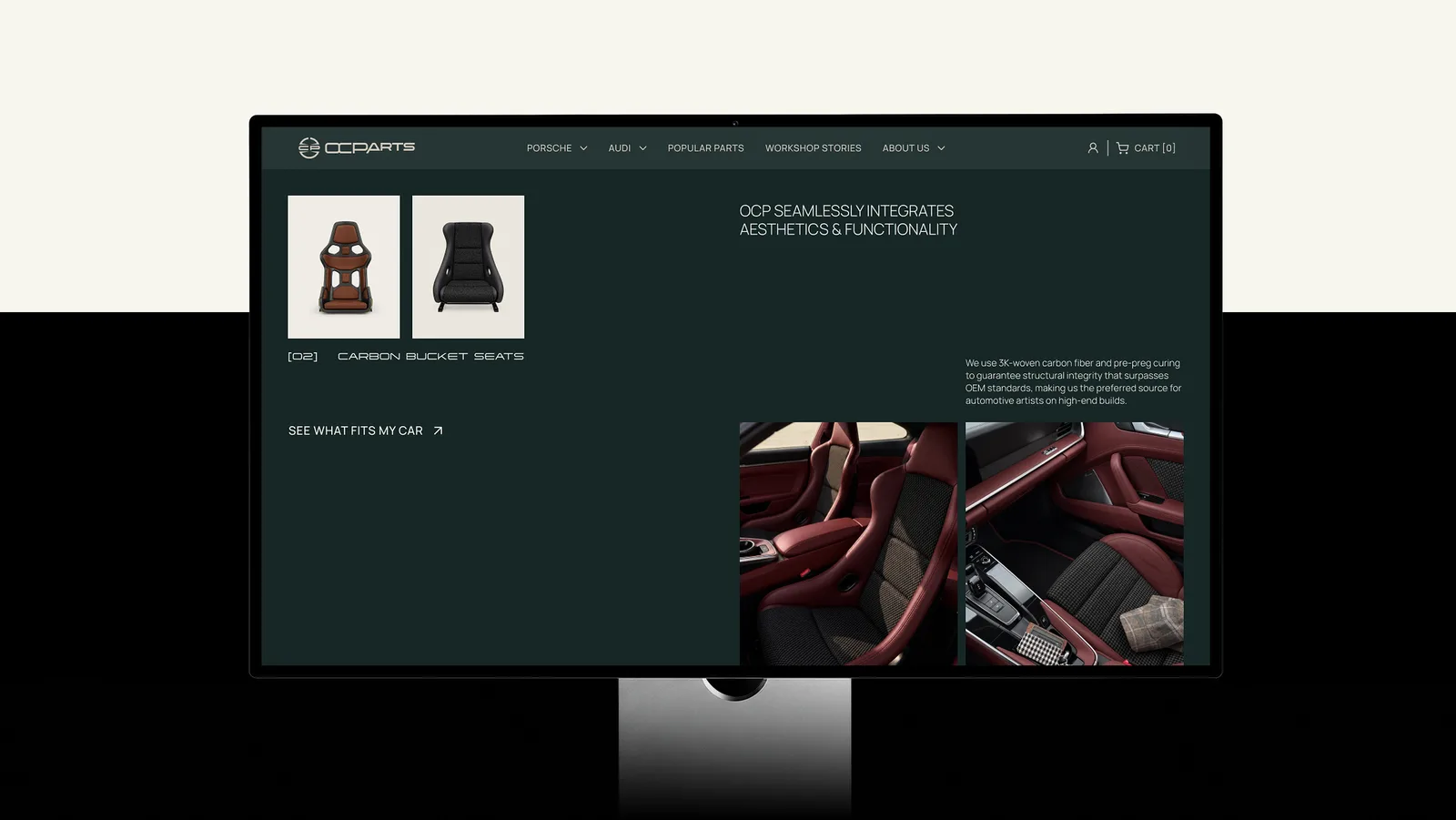
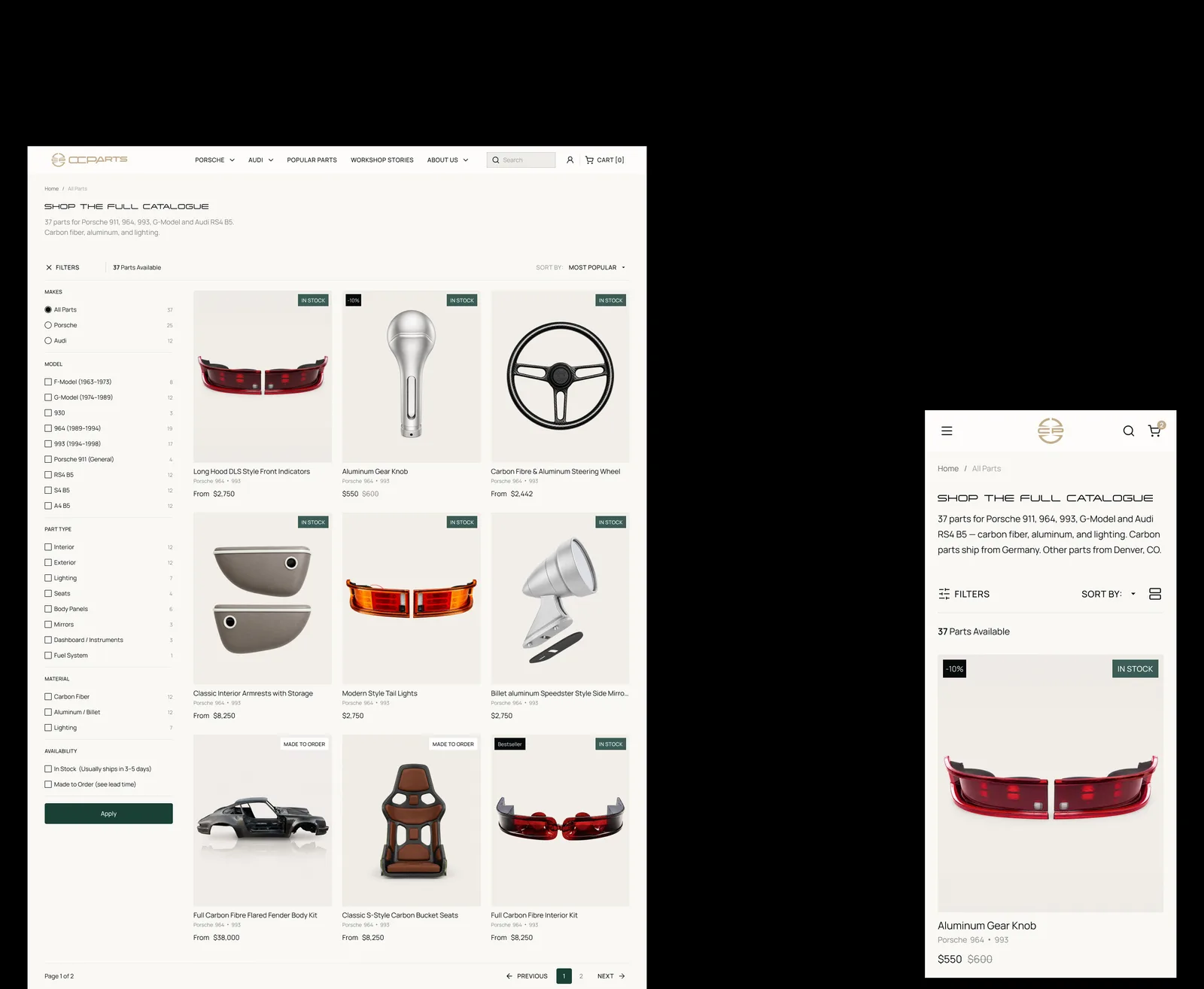
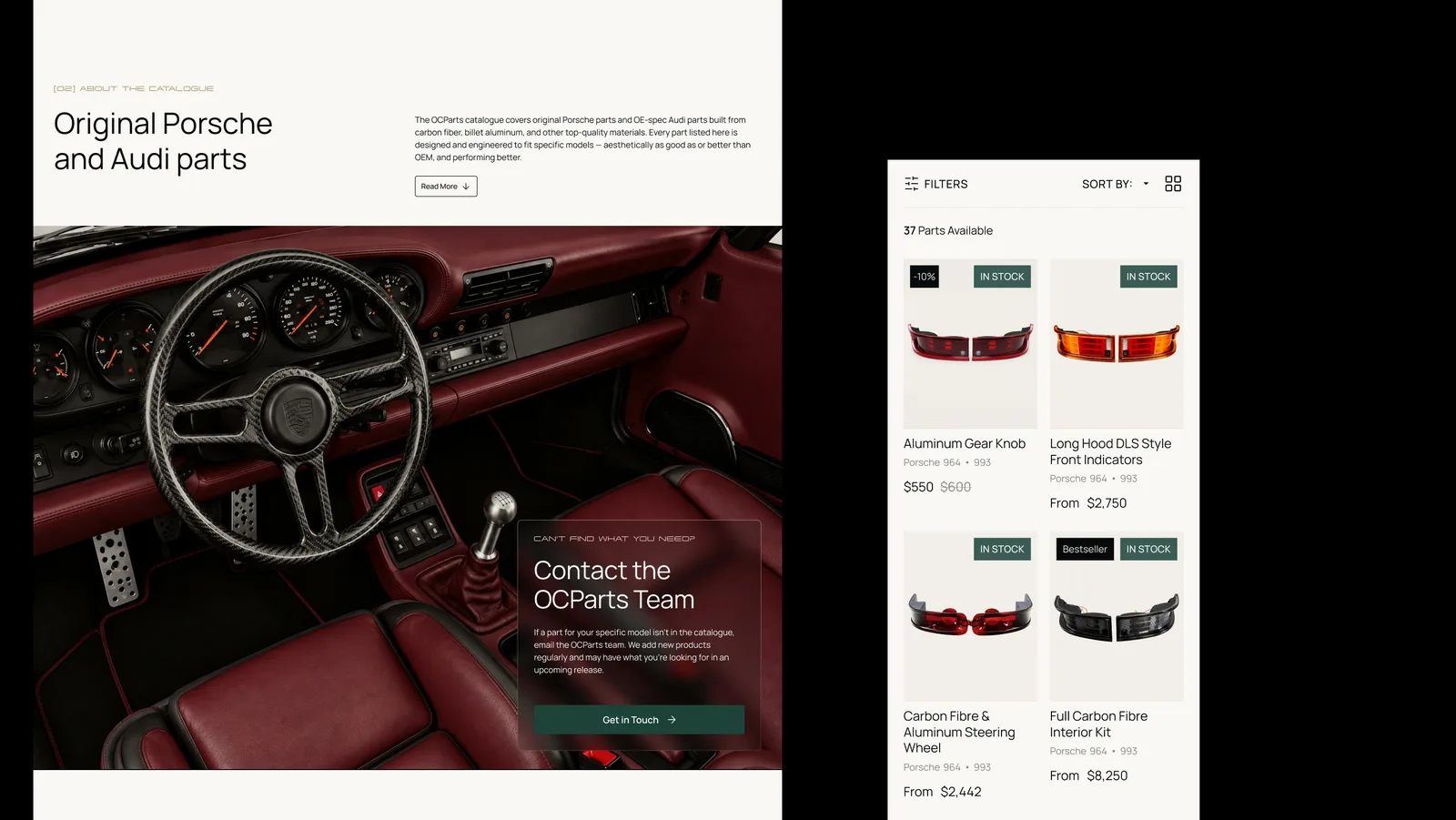
We rebuilt the site from a full UX audit up. A new structure with clear categories, separate lines for Porsche and Audi parts, product pages that show each part on the car, stronger SEO and an AI assistant for first-line questions. And we made buying simpler: a clearer cart and checkout flow that also handles B2B orders better, so fewer sales need a manual invoice. The assistant runs on OscarChat, a product whose UI/UX we also designed. The new site went live on October 12, 2026. We will publish site metrics once the next round of marketing has run long enough to measure.
5. Social: one format that worked from the first post
We tested a few directions. One worked from the very first iteration: a single part on a warm gold background, a short title, the logo. Those posts drew a flood of comments, shares and questions about specific parts. We also produced two AI videos that went live. Video did fine, clean statics did better.

Results
- +10,000 Instagram followers in the first three months, more than 70% organic. The account has kept growing since.
- Top post: carbon GT bucket seats on the gold background, about 12,500 likes, 146 comments and 2,900 reposts.
- Many times more DMs and warm inquiries than before the rebrand.
- A stack of qualified leads from Air|Water with the new identity and booth.
- A new e-commerce site with a clearer cart and checkout flow, live since October 12, 2026.
We don't publish revenue for this project. What we can show honestly is the audience, the engagement and the inbound, and we will add site metrics once there is enough data.
What's next
More inbound interest shouldn't mean more routine work for the team. Beyond the assistant already on the site, we have proposed an AI co-pilot for the harder conversations, trained on OCParts' own product knowledge, so the team spends its time on builds and buyers instead of routine questions.
What another manufacturer can take from this
- Make the look match the price. If buyers can't tell a premium part from a cheap one at a glance, they assume cheap.
- Answer the fears before the call. Fit, legitimacy and risk can be answered by the brand, the site and the content.
- Use AI next to real photos, not instead of them. A strict quality bar and real references matter more than the model.
- Make buying simple, B2B included. When the cart doesn't fit how customers buy, sales slip into email and invoices.
- Find one format and repeat it. One clean, consistent post type beat every clever idea we tested.
Before you ask
The core rebrand, product imagery and social relaunch ran over about 90 days, pulled forward by a fixed event date. The new site launched on October 12, 2026.
More than 70% of the 10,000+ new followers in the first three months were organic. The rest came from a modest paid budget.
Only with a strict process. We hold every image to a 9 out of 10 bar, discard more than 90% of generations, work from real part photos and model references, and have the client's engineers check fitment.
Brand identity, event identity and booth, AI visualizations alongside real product photography, social strategy and content, AI video, and a full e-commerce website with payments and an AI assistant.
No. The same approach, making the brand look as premium as the product so the price holds, works for any manufacturer whose sales depend on perceived quality.
Related reading
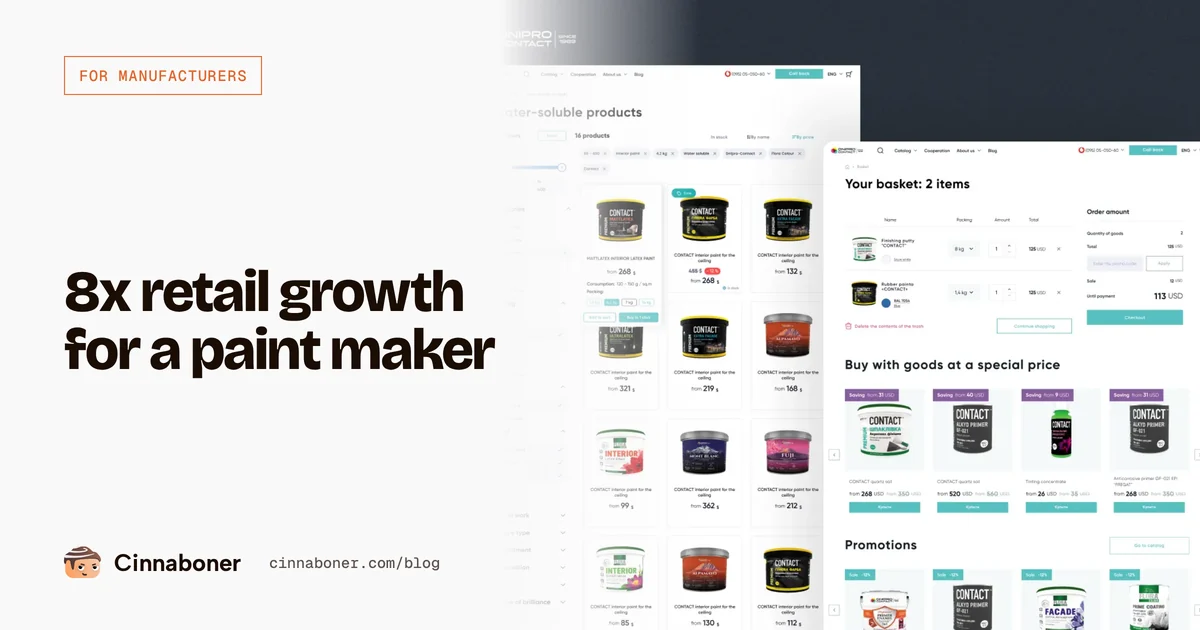
For the photography method, see AI product photography for manufacturers. For the social playbook, read social media marketing for manufacturers. And for another manufacturer story, see how a 40-year-old paint manufacturer grew its own retail channel 8x.
Make your brand look like the price it asks for
Brand, website, AI visuals and social for manufacturers of premium physical products. One senior team, for a fraction of what an in-house team costs.