Key takeaway: Social media marketing for manufacturers works when it shows process, expertise, and proof — not lifestyle content — because B2B buyers use LinkedIn and Instagram to verify credibility before they ever fill out a contact form.
There is a stubborn myth in manufacturing that social media is for lifestyle brands — not for companies that make things. B2B, industrial, ingredient, private-label, trade-first manufacturers: the thinking goes that social is a cost centre at best, a distraction at worst. Leave it to the agencies selling cosmetics on Instagram.
That belief is costing the people who hold it a lot of revenue. Distributors research brands on LinkedIn before they take a sales call. Retail buyers open Instagram before they book a meeting with a rep. Consumers follow manufacturing brands they trust, and the trust they build on social travels to the shelf. The question is not whether social media works for manufacturers. It is whether the manufacturer is running it correctly.
This is a working guide — what actually moves revenue for manufacturers on social. Platform choice, content mix, posting cadence, common failure modes, and how social connects to the rest of the brand so it pays for itself.
Why social matters for manufacturers right now
The purchase process for manufactured goods — whether consumer retail, specialty, trade, or wholesale — has a digital touch at every stage. Long before a distributor takes your call, they have looked at your site and your LinkedIn company page. Long before a consumer picks your product off a shelf the first time, they may have seen it scroll by on TikTok or Reels.
Manufacturers who build a real social presence earn five specific things.
Brand authority. You become the recognised name in your category, not a line item in a distributor's price sheet. That premium compounds across every retail negotiation for years.
Distributor and retailer pull. Trade buyers strongly prefer brands that can point to consumer demand. Active, high-engagement social is the cheapest form of demand proof you can offer.
Direct consumer relationships. Even manufacturers who do not sell DTC today benefit from an audience they can eventually route to their own store, their own email list, and their own product launches.
Search signals. Social engagement, brand mentions, and shares feed the signals that search and generative engines weight. SEO and social are not separate channels. They are one surface now.
Recruitment. Good manufacturing talent reads the same feeds as everyone else. A manufacturer with a strong, visible presence recruits better at every level.
Platform selection: where manufacturers actually get results
Do not maintain every platform. Pick the two or three where your buyers live, run them well, and ignore the rest.
LinkedIn — the B2B foundation
For any manufacturer with a B2B sales component — distributors, retail buyers, trade accounts, procurement contacts, private-label clients — LinkedIn is non-negotiable. It is where the buying decision is researched and the relationship is seeded.
LinkedIn works because the audience is already there and already in purchase mode. A head of merchandising at a regional retail chain checks LinkedIn the same week they take your call. A procurement manager at a multinational scans your company page before their team even builds a shortlist. A potential B2B partner reads your founder's posts to decide whether you are the kind of operator they want to share logistics with.
What to post on LinkedIn:
Product launches and product updates. A new SKU, a new format, a reformulation. Crisp imagery, two or three lines of why it matters, a direct link to the product page.
Manufacturing process and "behind the scenes." Factory floor footage, QC walk-throughs, the ingredient room. This is the content distributors send each other when they are vetting a supplier.
Industry commentary and trade show presence. Your read on a regulatory change, your team at a trade show, your take on a category trend. These posts earn the relationships the sales team cashes in three months later.
Case studies and results. With client permission. A retailer did 30% more on your product after you redesigned the end cap. Show it.
Company culture and team content. The human side. Distributors buy from companies they trust, and nothing builds trust faster than seeing the actual humans.
Three to four posts per week on LinkedIn is plenty. Missing a week matters less than missing a month; missing a month matters less than posting inconsistent garbage.
Instagram — visual brand building
Instagram earns its place for any manufacturer whose product is visually appealing — and that covers most consumer categories: cosmetics, food and beverage, home and decor, pet products, fashion, kids and toys, art supplies, anything with interesting packaging.
Instagram builds brand recognition and consumer demand, and both feed directly into the distributor conversation. A retail buyer who sees your brand has a genuine following with real comments is more confident in stocking the line. That confidence often shows up as better placement, better terms, and a bigger first order.

What to post on Instagram:
Professional product photography (non-negotiable), packaging and label detail shots, manufacturing and production process content, user-generated content from customers, factory or studio behind-the-scenes, and ingredient or material sourcing stories. Reels consistently outperform static posts in reach. If you are starting from zero, prioritise Reels for the first three months and you will build an audience two to three times faster than a static-only feed.
TikTok — organic reach at scale
TikTok's algorithm does not care how many followers you have. A video from a zero-follower account can reach hundreds of thousands if it is engaging. For manufacturers starting from scratch, this is the single highest-leverage organic platform available.
TikTok formats that perform for manufacturers:
Manufacturing process videos (the satisfying, educational genre that the platform loves). "How it's made" content, which has been one of TikTok's most reliable formats for four years straight. Packaging reveals — a box opening, a label reveal, a first look at a limited edition. Factory walk-throughs with founder commentary. Product demonstrations that show the thing actually doing what it claims.
TikTok skews young, which may or may not line up with your core buyer. But TikTok is also where category trends form before moving to Instagram and then to retail. Brands that show up early in a category on TikTok often earn the category association for years, at costs an Instagram-only budget cannot match.

Content strategy: what to post and how often
The 40/40/20 content mix
A sustainable feed for a manufacturer runs on a three-type split. Drift from these ratios and the feed either feels like a catalogue or a lifestyle blog — neither of which converts.
40% product content. Photography, new launches, demonstrations, SKU highlights. This is the commercial engine. It drives awareness and direct purchase intent.
40% process and story content. Manufacturing floor, sourcing, brand narrative, team. This is the authority layer. It makes the product content credible; it is what a buyer remembers when they are choosing between you and a competitor.
20% education and community. Category explainers, industry insights, customer questions answered, user-generated content amplified. This builds engagement and signals to every algorithm that your account is worth surfacing.
Manufacturers who post only commercial content build audiences that do not engage and do not share. Manufacturers who post only story and education build audiences that love them and do not buy. The mix is the point.
Posting frequency that a factory can actually sustain
Consistency beats frequency. A manufacturer posting three times a week for twelve months will finish the year ahead of one posting daily for six weeks and then going quiet for the rest of it.
Realistic starting targets: LinkedIn three to four posts per week, Instagram four to five posts per week mixing static, Reels, and Stories, TikTok two to three videos per week. Batch the production. One disciplined shoot day — half photography, half short-form video — generates three to four weeks of content across every platform. Most manufacturers do not need more capacity; they need better planning for the capacity they already have.
Need help turning the factory into a feed?
We plan, shoot, and edit manufacturer content in batches — LinkedIn, Instagram, and TikTok from one production day, priced for manufacturing margins rather than DTC budgets.
Common mistakes manufacturers make on social
Five mistakes account for most of the failed manufacturer social accounts we have looked at.
Starting with paid before organic. Ads amplify a brand that exists. They cannot substitute for one. A manufacturer running cold paid traffic to a dormant Instagram account is paying to send qualified buyers to an empty room.
All product, no story. Commercial-only feeds produce audiences that do not trust you. The product posts work better when they are embedded in a feed that also shows the factory, the team, the thinking, and the category point of view.
Inconsistent visual quality. One photo-of-a-photo post ruins the thirty good ones around it. Buyers read visual quality as a proxy for product quality and company operations. A sloppy feed signals a sloppy operator, whether or not that is true.
No next step. A post with no CTA to the product page, the newsletter, a retail locator, or a booking link is a brand-awareness exercise with no commercial output. Every post should route the viewer somewhere they can transact.
Abandoning the channel. A LinkedIn page that last posted in November tells every distributor researching you that the company is either distracted or in trouble. Empty is worse than absent.
How social connects to the rest of the digital presence
Social does not work in isolation. It is one layer inside an integrated presence where the site, the packaging, the product catalogue, and the social channels all tell the same brand story. A consumer who finds you on TikTok, checks your Instagram, clicks to your site, and eventually picks your product off a retail shelf should feel the same brand every step of the way — same voice, same visual language, same promise.
This is the specific reason manufacturers who invest in brand identity and packaging first see disproportionately better social media results. The content they create is visually consistent and on-brand by default. There is no "what should this post look like?" conversation every Monday morning — the brand system answers the question before it is asked.
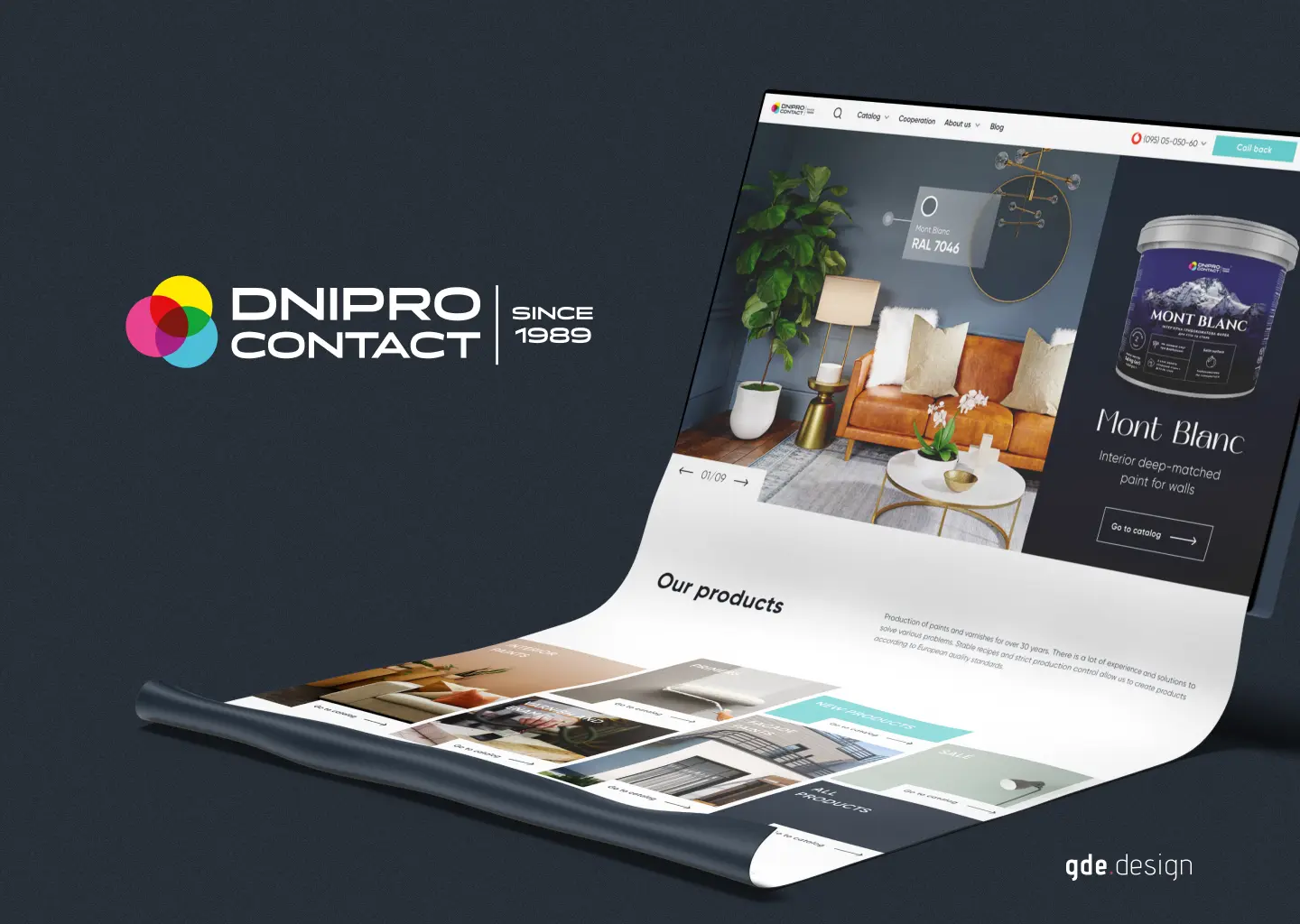
If your packaging, site, and social do not feel like the same brand, fixing social alone will not move the number. Fix the shared identity first; social will follow. We walked through exactly this pattern with a Ukrainian paint manufacturer in the Dnipro Contact case study — brand and packaging first, digital and social layered on top.
A 90-day starting plan
Ninety days is enough to build a credible social presence from zero. Enough to learn what performs, enough to develop a rhythm, short enough to commit to without reorganising the company.
Days 1 to 14 — foundation. Confirm platforms. Lock brand imagery, logo usage, and colour system for social. Write bio copy and build a starter link-in-bio destination. Book the first batch production day.
Days 15 to 45 — batch one and launch. Shoot. Edit thirty pieces of content covering product, process, and education. Start posting on the three-type rotation. Engage daily in comments on adjacent accounts.
Days 46 to 75 — learn. Review what performed. Double down on two or three formats that worked. Book batch two with that learning baked in.
Days 76 to 90 — systematise. Lock the content calendar, the production cadence, and the reporting rhythm. By day 90 the team should be operating a sustainable system that does not require heroics.
FAQ
Does social media marketing work for B2B manufacturers?
Yes — especially on LinkedIn, where buying decisions are researched and relationships are built. B2B manufacturers with active LinkedIn presences read as more credible to distributors and retail buyers than those without. For consumer goods manufacturers, Instagram and TikTok build the consumer demand that supports B2B conversations.
What social media platforms should a manufacturer use?
At minimum: LinkedIn for B2B relationships and brand authority, and Instagram if your products are visually appealing consumer goods. TikTok is the highest-leverage platform for organic reach if you're starting from zero and targeting consumer audiences. Choose based on where your buyers and consumers actually are — never maintain platforms you cannot run consistently.
How often should a manufacturer post on social media?
Consistency matters more than frequency. LinkedIn: 3 to 4 posts per week. Instagram: 4 to 5 posts per week. TikTok: 2 to 3 videos per week. These are sustainable starting targets. Holding them for a year will outperform posting daily for six weeks and stopping.
What type of content works best for manufacturing brands on social?
Process and behind-the-scenes content consistently performs — manufacturing is inherently interesting to people who do not see it every day. Packaging reveals, ingredient or material stories, and "how it's made" format content generate high engagement. Mix with product content and education for a varied feed.
How long does it take to build a social audience as a manufacturer?
Expect 3 to 6 months of consistent posting before organic reach becomes meaningful. TikTok can generate results faster when content resonates with the algorithm. LinkedIn relationship-building produces visible results — inbound inquiries, distributor connection requests — within 2 to 3 months of consistent activity. Social is a long-term asset. The brands that start now will have a compounding advantage over those that wait.
Related reading
Keep building the manufacturer brand stack: How Dnipro Contact Went from Factory to Full Brand for a phase-by-phase case study of the full brand launch, How to Brand a Physical Product for E-Commerce for the five-step brand framework, and Cinnaboner for Manufacturers for the service overview and the rest of the case portfolio.
Ready to build a manufacturer presence that converts?
Book a discovery call or request a quote. We'll map the channels, the content, and the batch production against your catalogue — and scope what ninety days of serious social would cost your factory.