Key takeaway: An AI-ready product page puts specs, structured data, and clear answers above the fold so both procurement engineers and language models can extract what they need — if an LLM can't parse your page, neither can the buyer using it.
Open your top revenue product page. Read the first 200 words. Now imagine you're a procurement engineer with a deadline, or you're an LLM trying to answer a buyer's spec question. Did either of you get what you needed? On 9 out of 10 manufacturer sites we audit, the answer is no. The page opens with brand history, a stock photo, and a category tagline. The specs are buried in a downloadable PDF. The buyer leaves. The model can't cite what it can't parse.
The product page is the leverage point. It's where the buyer makes the shortlist call and where the AI engine pulls the citation. Most manufacturer SEO programmes spend a year on the homepage and the blog, then ignore the 50 pages where the actual revenue decisions get made.
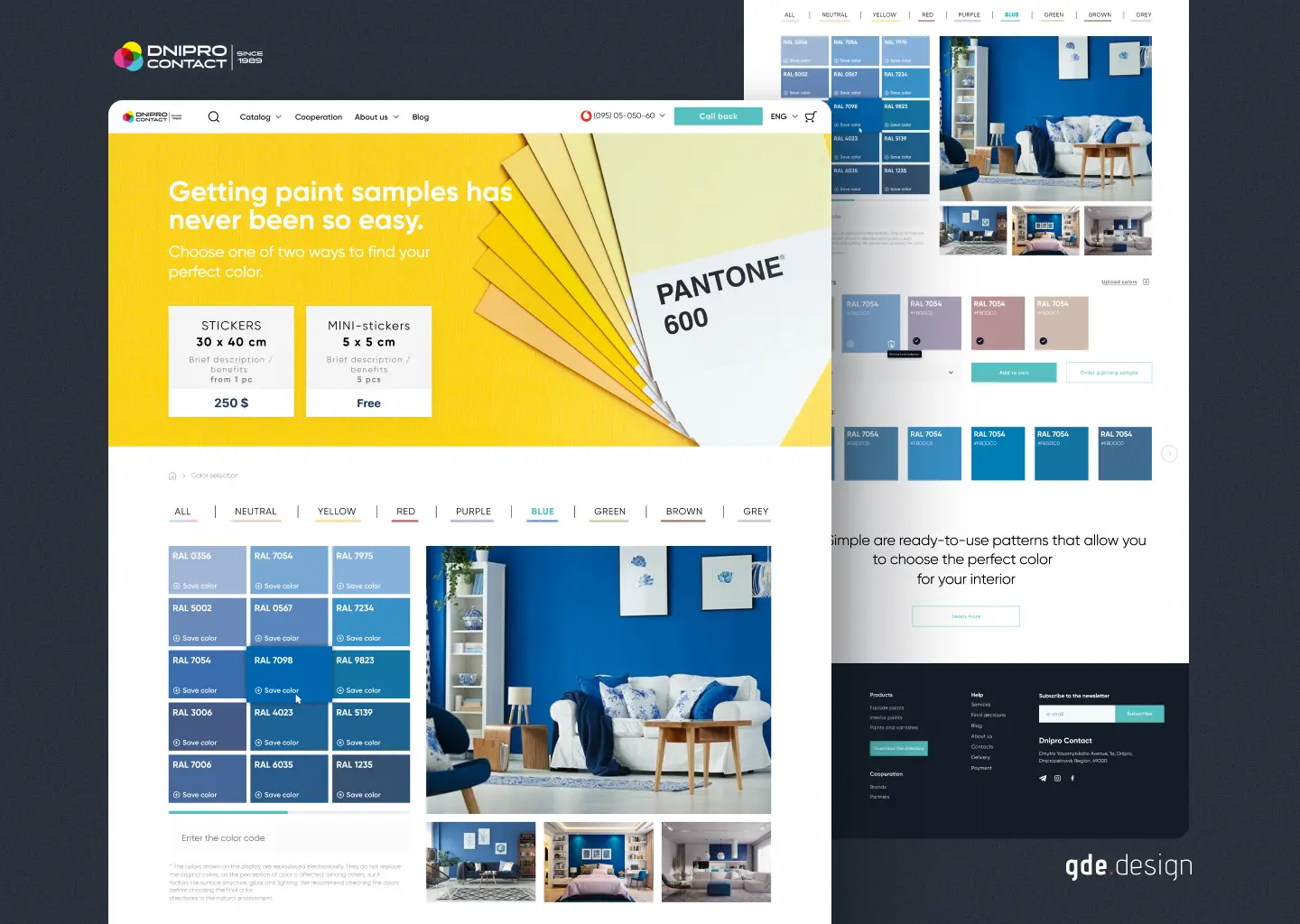
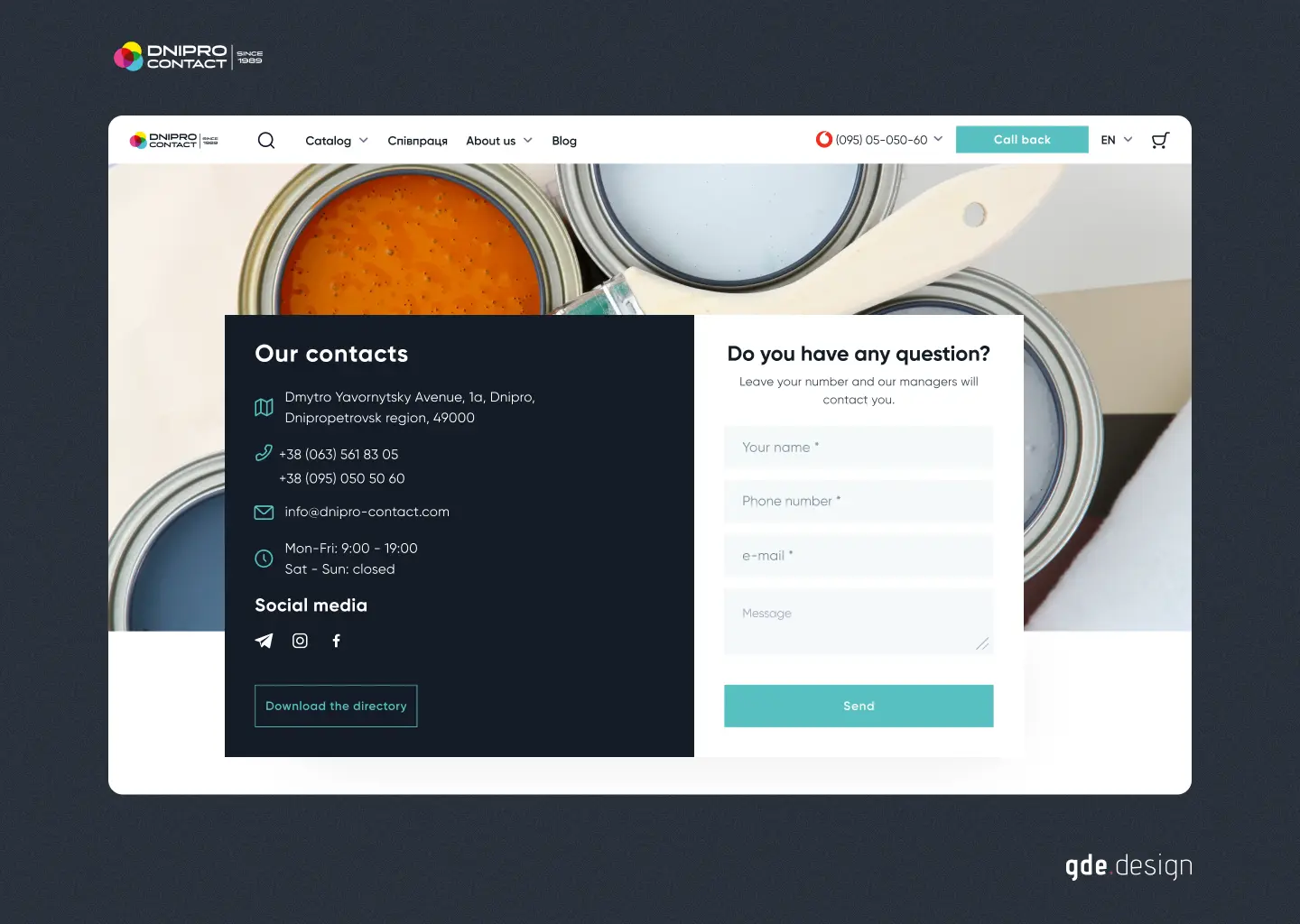
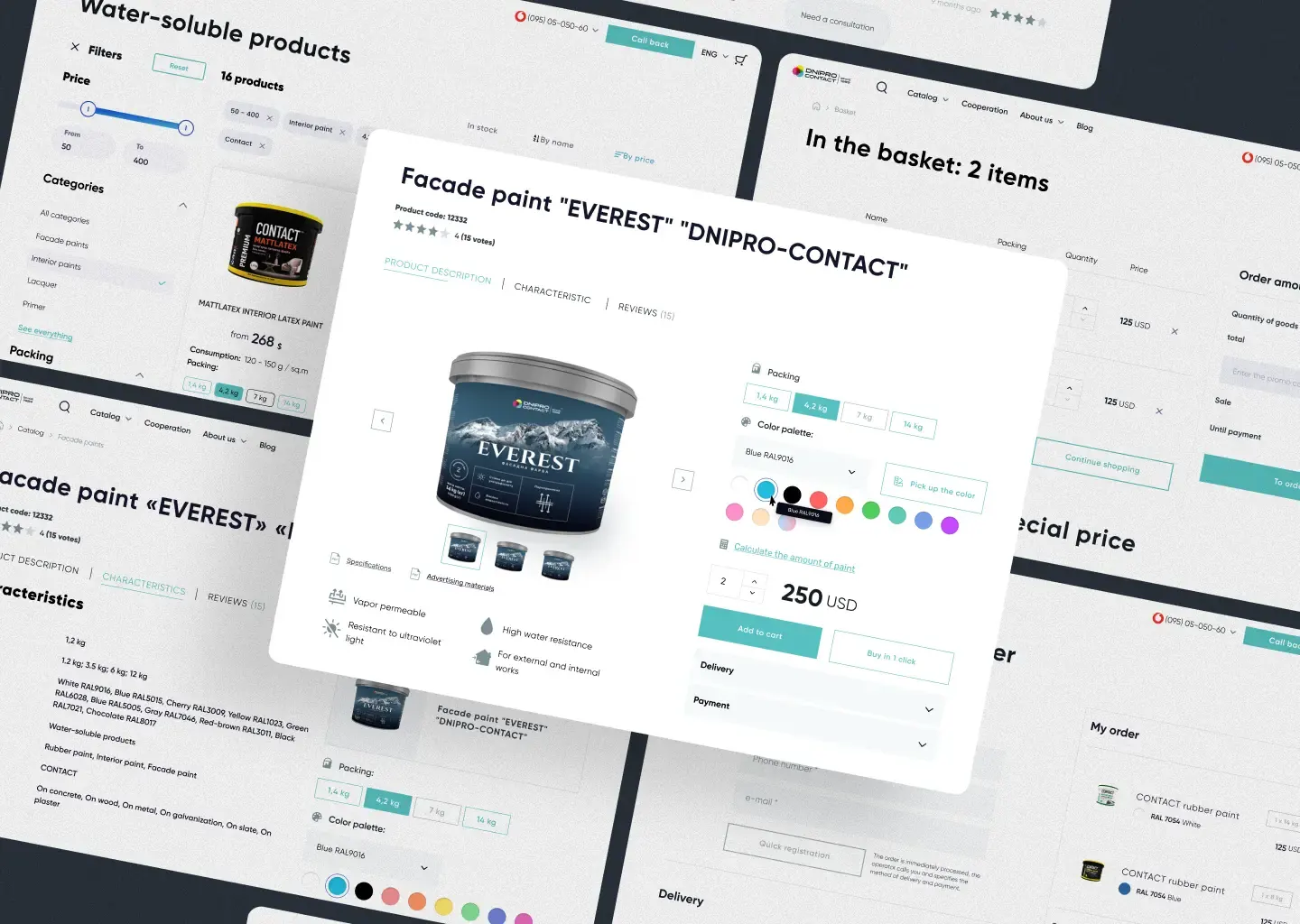
We rebuilt 100+ SKUs for Dnipro Contact, a Ukrainian paint manufacturer shipping since 1989. The product pages do double duty: senior painters read them, AI engines cite them, both audiences get what they need from the same content. The framework is portable. Here it is.
Why product pages are the leverage point
The hierarchy of impact on a manufacturer site, ranked by buyer-decision weight, runs roughly: product page > comparison content > application guide > category hub > homepage > blog. Most teams invert this. They write 40 blog posts before they fix one product page.
The reason is partly cultural - blogs feel like marketing, product pages feel like ops. Partly historical - product pages were built once by an internal merchandiser five years ago and never revisited. Partly tooling - the CMS makes blogs easy and product pages painful. None of these reasons survive contact with how AI search actually works.
When ChatGPT or Perplexity returns a cited answer about a specific industrial product, 80%+ of the time the cited URL is a product page or a category page, not a blog post. The model wants the source closest to the spec. Your blog post about "5 things to consider when choosing primer" is interesting context but it's not the cited source on "drying time of polyurethane primer at 5 degrees C." The product page is.
This means the AI search opportunity for most manufacturers is hiding in plain sight on pages they already own. A six-week product-page rewrite outperforms a six-month content marketing programme on AI citation impact, every time we've measured it.
The four questions every product page must answer above the fold
Buyers don't read product pages top-to-bottom. They scan for four answers, in this order, every time:
1. What surface or use case does this work for? 2. How much do I need - coverage, throughput, capacity? 3. What are the time constraints - drying, curing, lead time? 4. What does it cost - per unit, per m², per hour, per ton?
If your above-the-fold copy doesn't answer all four in plain language, you've lost the buyer and the model. We build every Dnipro Contact product page around exactly these four questions. The interior wall paint page opens with: "For interior plaster, drywall, and wood. 12-14 m² per litre on smooth substrate. Touch-dry in 1 hour, recoat in 4. From €4.20 per m² covered." That's 30 words. The procurement engineer makes the shortlist call from that. ChatGPT cites it verbatim.
The four-question opener is also the AEO format that gets cited most. It's pre-structured as an answer block. The model lifts it whole. We've seen the same paragraph appear in Perplexity citations, Google AI Overviews, and ChatGPT browse-mode responses within the same week.
Beneath the opener: the structured spec table, the FAQ block, the application notes, the cross-sell. The opener is what wins the page. Everything else is reinforcement.
Plain-language specs that double as structured data
There's a false trade-off in manufacturer copywriting between "human-readable" and "machine-parseable." It doesn't exist. The same sentence does both jobs if it's written correctly.
"Coverage 12-14 m² per litre on smooth substrate" is human-readable, machine-parseable, and citation-ready. It uses an explicit unit, a numeric range, and a substrate qualifier. The model parses it as a structured fact. The painter reads it as a number they can plan around.
Compare to "high-coverage formula optimised for professional applications." This is filler. The painter learns nothing. The model can't extract a fact. The page loses on both fronts.
Plain-language specs follow three rules. Use real numbers with units, not adjectives. Include conditions ("on smooth substrate", "at 20 degrees C", "at 50% RH") so the spec is actionable. Write in complete sentences in the body copy, then mirror the data in a structured spec table below. Both formats matter - the table is parseable, the prose is citable.
The spec table itself should run 10-20 fields for an industrial product. Standard fields: substrate compatibility, coverage rate, drying time, recoat window, full cure, VOC content, certifications, packaging sizes, shelf life, application temperature range. The fields the model wants are the fields the spec writer wants. They're the same list.
Schema markup specifics: where to put what
Three schemas matter on a product page.
Product schema wraps the page itself. Required fields: name, image (high-res, ideally on white), description (a clean 50-80 word summary, distinct from the H1), sku, brand (with Brand schema nested). Optional but high-value: gtin, mpn, category, material, weight.
Offer schema nests inside Product. price or priceSpecification, priceCurrency, availability (InStock, OutOfStock, PreOrder), seller. If you don't publish exact prices, use priceSpecification with a priceRange. Don't omit pricing entirely - the model treats price-less products as lower-confidence citations.
FAQPage schema wraps the FAQ block at the bottom of the page. Each Q/A pair is a structured Question with an acceptedAnswer. This is the single most-cited schema on industrial product pages. We see FAQPage answers lifted verbatim into Google AI Overviews and Perplexity responses on a daily basis across our manufacturer projects.
Skip AggregateRating unless you have real reviews. Faked or thin review counts get filtered by Google's spam systems and tank the page. Add Review schema only when actual reviews accumulate.
Validate every schema in Google's Rich Results Test before shipping. Broken schema is worse than no schema - it signals low quality to the model and the page gets demoted.
Audited your product pages with an AI eye?
Most manufacturer pages are invisible to ChatGPT and Perplexity. We rebuild them around the four-question framework with full schema and shop-by-job taxonomy. Engineers read them. Models cite them.
Buyer-job taxonomy beats SKU taxonomy
Most manufacturer catalogues are organised by internal product family. Series 100, Series 200, Series 300. The buyer doesn't think this way. The buyer thinks "I have a steel substrate, I need a primer, I'm working in cold conditions." The taxonomy should match the job, not the SKU.
We rebuilt the Dnipro Contact catalogue around four jobs: interior surfaces, exterior surfaces, primers and prep, specialty applications. Inside each job, products sort by sub-job (interior wall, interior wood, interior metal). The buyer lands on a category page that lists the 5-10 products that fit the job, with the four-question answer for each in card form.
Shop-by-job has three measurable benefits. Time-to-shortlist drops because the buyer doesn't have to translate their job into your SKU code. AI engines cite category pages more often when the H1 matches a real query ("interior paint for plaster walls" vs "Series 200"). Internal-link structure becomes natural because related products genuinely share a job, not just a SKU prefix.
The migration is mostly information architecture work, not new content. Existing product pages keep their URLs. New category pages get added on top. Old SKU-based navigation gets retired or hidden. The detail on how this rolled out across 100+ SKUs is in our Dnipro Contact case study. The same pattern applies to chemicals, components, fasteners, lubricants - any catalogue where buyers shop by problem, not part number.
The 90-minute audit you can run today
Pick your top revenue product page. Set a timer. Run through this in 90 minutes.
Minutes 0-15: Read the page as a buyer. Can you answer the four questions (surface, coverage, time, cost) from above-the-fold copy? Note the gaps.
Minutes 15-30: Run the URL through Google's Rich Results Test. Check for valid Product, Offer, and FAQPage schema. Note what's missing or invalid.
Minutes 30-45: Open ChatGPT or Perplexity. Ask 5 long-tail technical queries the page should answer ("what's the drying time of [product]", "what surfaces is [product] compatible with", "what does [product] cost per m²"). Note whether the page is cited. Note whether competitors are.
Minutes 45-60: Check the spec table. Count fields. Industrial standard is 10-20. Note what's missing.
Minutes 60-75: Check the FAQ block. Count Q/A pairs. AEO standard is 6-10, phrased as buyer queries. Note the gap.
Minutes 75-90: Check internal links. Are there at least 3 to related products and 2 to application guides? Are anchor texts descriptive? Note what's thin.
You now have a punch list. Most pages need 3-5 specific fixes, not a rebuild. Ship them in priority order: schema first (highest leverage, lowest effort), then opener rewrite, then FAQ block, then spec table fill-out, then internal-link densification.
If you want the audit run across the full catalogue with prioritised dev tickets, our manufacturer presence audit is the operational version of this exercise.
FAQ
How long does it take to rebuild a product page properly? A clean rewrite with schema, FAQ block, and spec table runs 4-8 hours per page once the template is set. The first 5 pages take longer because you're building the template. Pages 6-50 scale fast.
Do I need different pages for different markets? For language differences, yes. For unit differences (metric vs imperial), often yes. For currency, usually one page with switchable Offer schema works. The model parses localised pages better than mixed-locale ones.
What if my products are configurable or made-to-order? Build a parent product page with the four-question opener and full schema. Link to a configurator or quote form for the specifics. The parent page is what gets cited - the configurator captures the conversion.
Should I include downloadable PDF datasheets? Yes, but as a supplement, not a replacement. The HTML page is what AI engines cite. The PDF is what gets archived in the engineer's project folder. Both audiences want both formats.
Is AggregateRating worth adding? Only if you have real reviews from real buyers. Faked or thin reviews trigger spam filters and demote the page. If you have <10 genuine reviews, leave it off until you do.
How do I prioritise across 100+ SKUs? Top revenue products first, top margin second, organic-search-winning third. Ship 10 properly, measure citation lift in 30-60 days, then scale the playbook. Don't try to ship all 100 in one sprint - the template iterations on the first 10 will save you weeks across the rest.
Related reading
The page-level work in this article sits inside a wider strategic frame. For the positioning layer, see GEO for manufacturers. For the schema and format detail, see the answer engine optimization playbook. The full Dnipro Contact build, including the catalogue rebuild and shop-by-job migration, is documented in our digital brand launch for manufacturers case study.
Make your catalogue AI-readable.
Book a 30-minute call. We'll run the 90-minute audit on your top 5 product pages live and walk you through the prioritised fix list. You'll have a punch list before the call ends.