Key takeaway: An AI-powered website redesign for manufacturers replaces decade-old sites with structured, spec-first pages that convert procurement engineers and get cited by AI search — in weeks, not months.
Your last site refresh was 2014. The hero still says "welcome to our website." The product list is a PDF download from 2019. The contact form has 11 fields and one of them is "fax." A buyer hit it last week, did not find a spec, and went to your German competitor.
We see this site every quarter. Brochure architecture, SKU lists no buyer reads, and zero AI-readability for the new generation of agents that scrape the web on behalf of buyers.
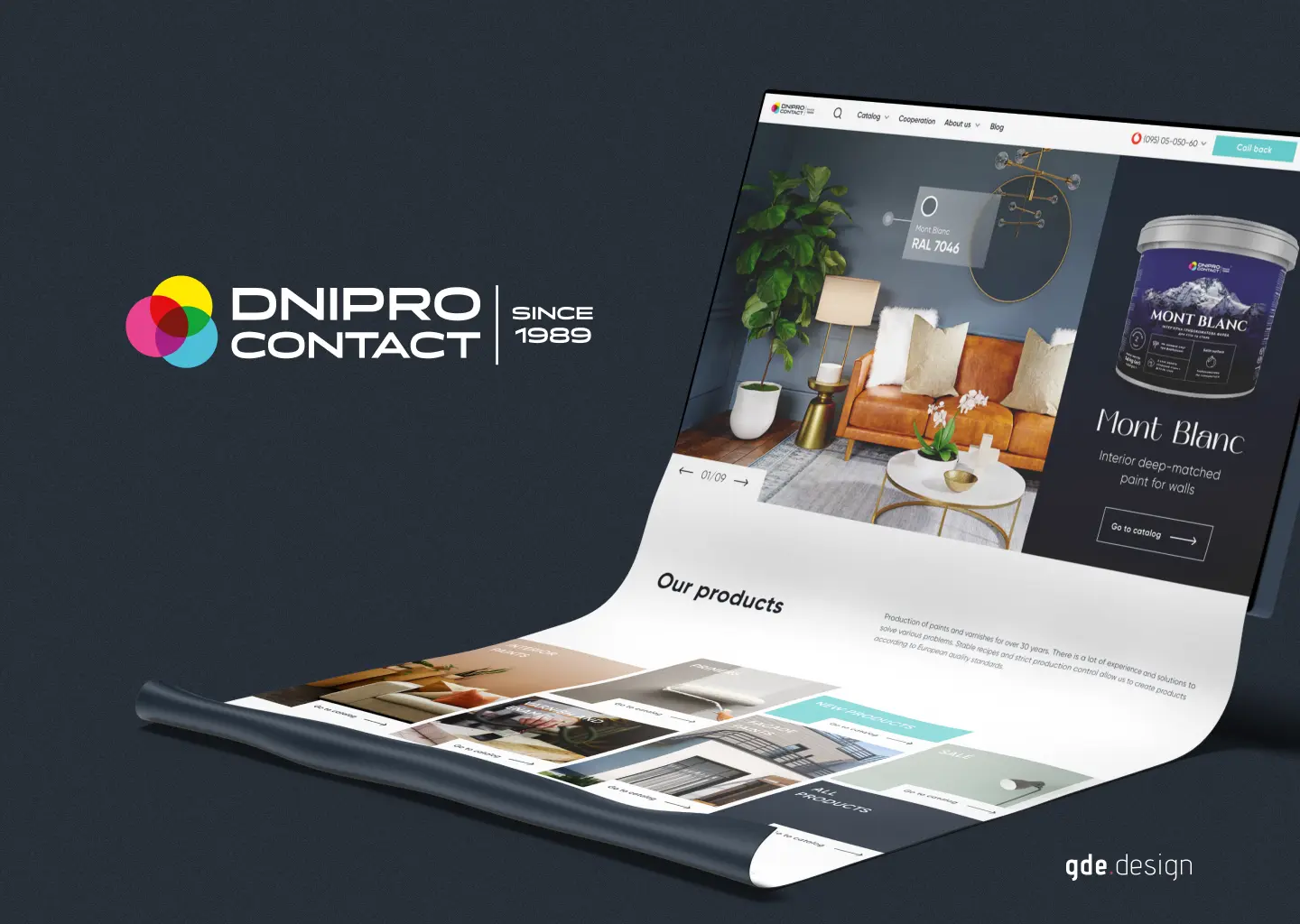
We have rebuilt three of these in the last 18 months. Dnipro Contact (paint, since 1989, 100+ SKUs). Barvita (cosmetics, modular packaging system). Eheim (aquarium equipment manufacturer, full product catalogue). This piece is what AI tools changed in our redesign process, what they did not replace, and what each rebuild actually looked like.
The state of manufacturer sites in 2026
We audit a lot of these. The patterns repeat.
Most sites are 6 to 12 years old at the structural level. The CMS got swapped, the colours changed, but the information architecture is the original brochure: home, about, products (PDF), contact. Buyers in 2026 do not browse like that. They search, they compare, they want a spec in 10 seconds, and they want a quote without a phone call.
The product taxonomy is internal, not buyer-facing. Categories named after factory lines, not jobs to be done. A roofer looking for "anti-condensation primer for steel" cannot find it because the manufacturer has it filed under "industrial coatings, line 4."
There is no technical depth where it matters. Spec sheets live as PDFs that take three clicks to find, do not render on mobile, and are invisible to search and to AI agents. The buyer who needs a viscosity reading at 25C bounces.
There is no path to a quote that feels lighter than a sales call. The form is long. The phone number defaults to office hours. The chat widget, if any, is on a 2023 SaaS plan that is wrong half the time. We covered the chatbot side of this in our AI chatbots for manufacturer websites piece.
And the site is not AI-readable. Schema is missing. Product pages have no structured data. AI agents acting for buyers cannot pull your specs into their answer. You are invisible to the next interface.
The 7 things every manufacturer site must do
The redesign brief we write, every time, comes down to seven jobs.
1. Job-based taxonomy. Buyers find products by what they are doing, not by your factory layout. "Sealing a roof", "priming galvanised steel", "thermal-bridge interruption". Your internal product names live underneath.
2. Hero search. Not a hero image with a tagline. A search bar that takes "stainless 304 M8 fastener" and returns the SKU page in two clicks. This is the single highest-leverage change we make.
3. Technical specs on the page, not in a PDF. Tables, not downloads. Indexable, searchable, AI-readable. PDFs as the secondary download for procurement, not the primary surface.
4. Distributor and dealer finder. Country-aware, product-aware, with phone numbers and email. The buyer who lands from outside your home market should never see "contact us" as the only path.
5. RFQ shortcut. A 3-field form, not 11. Company, product, volume. Everything else is collected on the call. The form is the trigger, not the gatekeeper.
6. SEO and GEO foundations. Schema for Product, Organization, FAQ, and BreadcrumbList. Structured data that AI search engines (ChatGPT search, Perplexity, Gemini) can ingest. Without this, you are invisible to the new buyer interface.
7. Mobile that actually works. 60 to 75% of B2B traffic is now mobile, including on industrial sites. Sites built in 2014 fail this test. Every redesign we ship is mobile-first.
Hit these seven and the site is doing the job. Miss any one and the leak shows up in analytics within a quarter.
Where AI tools changed our process
AI did not replace the redesign. It changed five specific phases.
Research. Competitive audits that used to take a senior strategist 3 to 5 days now run in 4 to 8 hours. We pull every competitor site, run structured extraction across pricing, taxonomy, schema coverage, and load speed, and produce a comparable matrix. The senior strategist still reads it and decides what matters. The collection is the part AI took.
Copy drafting. First-draft product page copy across 100+ SKUs used to be a content writer's full month. Now we generate first drafts from the spec sheet plus brand voice prompt, and a senior editor lands them. Roughly 70% time saved on first draft. Final copy still goes through a human pass because brand voice gets lost in translation.
Taxonomy. We feed the full SKU set, the spec sheets, and the customer-search-term log to a structured prompt and get a candidate taxonomy back in an afternoon. Used to be a 2-week workshop. We still hold the workshop, but we walk in with a starting point that survives 80% of the discussion.
Schema and structured data. Generating Product, FAQ, and HowTo schema across hundreds of pages used to be developer ticket work. Now it is a generation step in the build pipeline. Schema coverage on our recent rebuilds is at 95%+, where most manufacturer sites sit at 0%.
Image generation. Hero imagery, lifestyle context, fill imagery for blog and resource pages. Covered in detail in our AI product photography for manufacturers piece. Bottom line: the visual layer of the redesign is 60 to 80% faster than it used to be.
Where AI tools did NOT replace humans
Five places we still send the work to a senior person, every time.
Information architecture. AI generates plausible IA. Senior strategists generate the IA that survives the next 5 years of catalogue growth. The difference shows up at month 18 when the manufacturer launches a new line and the AI-generated IA cannot absorb it without a rebuild.
Conversion judgement. Where to put the RFQ. When to interrupt with a chatbot. How long the spec table should be before a download CTA appears. AI does not know your buyer. The senior team that has shipped 50 manufacturer sites does.
Brand voice. AI drafts that drift toward stock SaaS-speak. Voice on a 30-year manufacturer needs gravity and specificity. The line "since 1989" lands different from "we have been around for a while." A human edit holds this.
Edge-case UX. International dealer finder for a buyer in Kazakhstan looking for a specific cure-time additive. Multi-currency pricing for a contract customer with a logged-in account. AI hand-waves this. Senior UX designs around it.
The decision of what not to ship. AI happily ships everything. Senior teams cut. The 18-page resource hub becomes 4 pages that earn 80% of the value. This is taste work, and it is still human.
Three real before-and-after teardowns
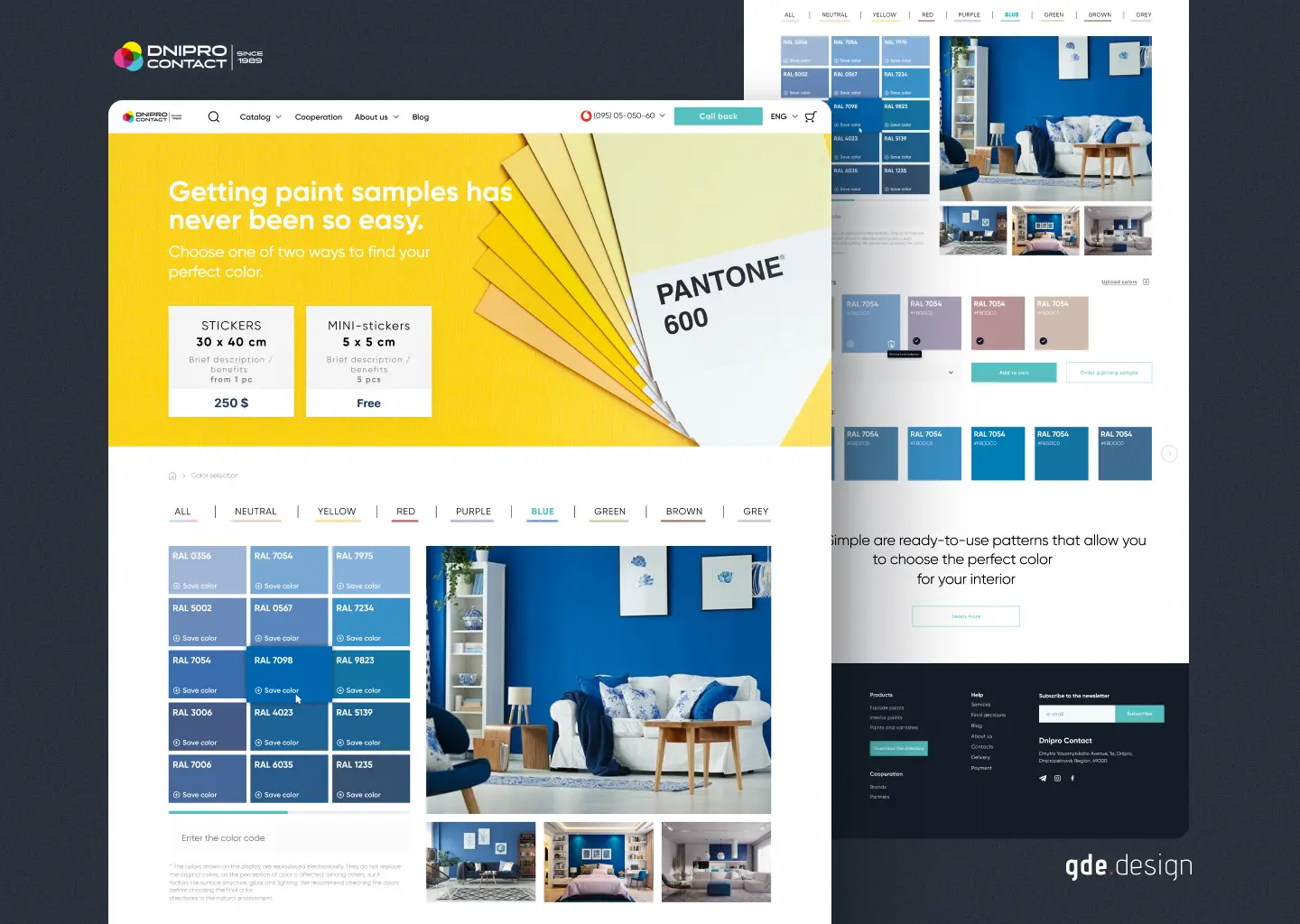
Dnipro Contact. Paint manufacturer, since 1989, 100+ SKUs across interior, exterior, primer, and specialty. Before: a brochure site with PDF product lists and a contact form. After: a digital brand launch with new packaging system, e-commerce, 3D mockups, colour visualisation tools, a litres-per-room calculator, and product pages with embedded technical specs and schema. We covered the full case in digital brand launch for manufacturers. Time to ship: 14 weeks. Result: the litres calculator alone became their highest-converting entry point, beating the homepage hero.
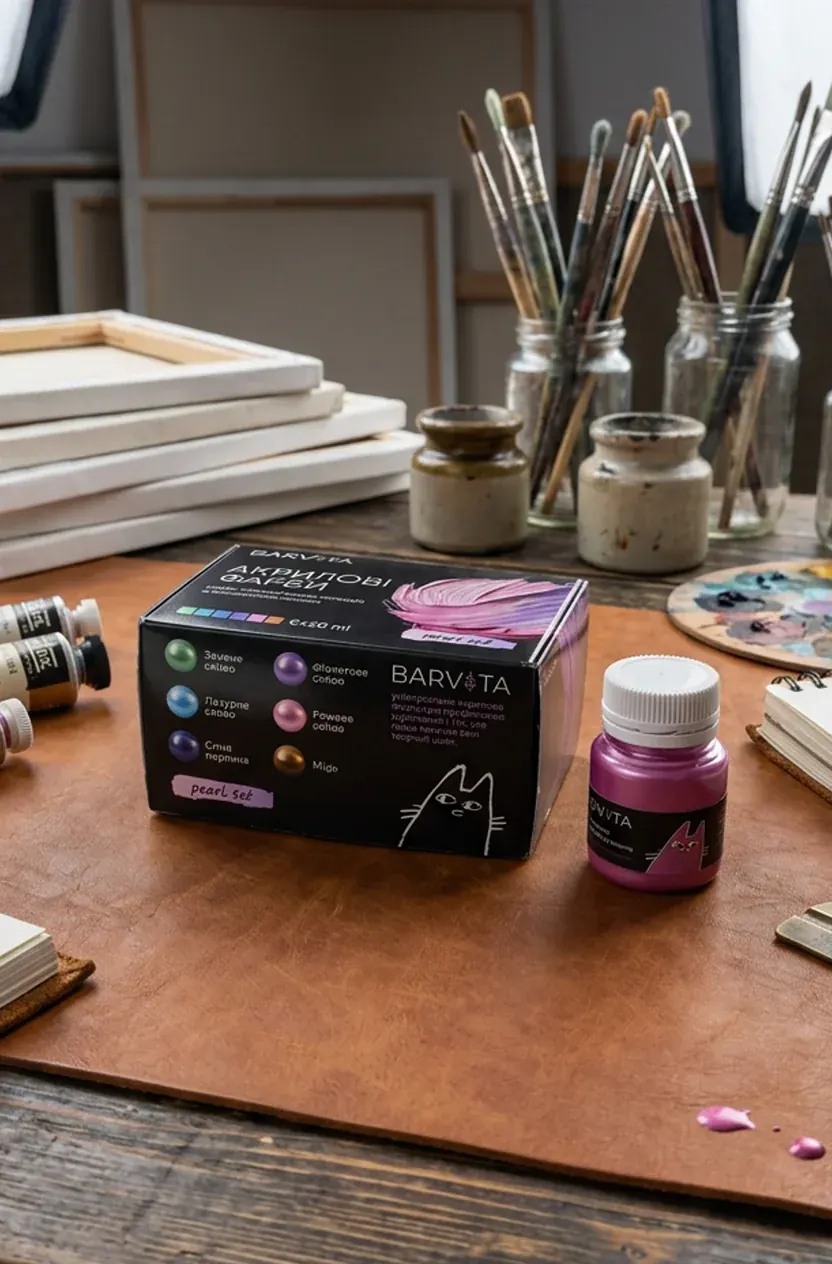
Barvita. Cosmetics packaging brand with a modular SKU system. Before: nothing - the site existed only as a placeholder while the packaging shipped. After: brand system, e-commerce, modular product page architecture that absorbs new SKUs without redesign, integrated with their packaging system so a new SKU on the line becomes a new page in 48 hours. Time to ship: 10 weeks. Result: every new SKU is a marketing-ready page on day two, no agency call needed.
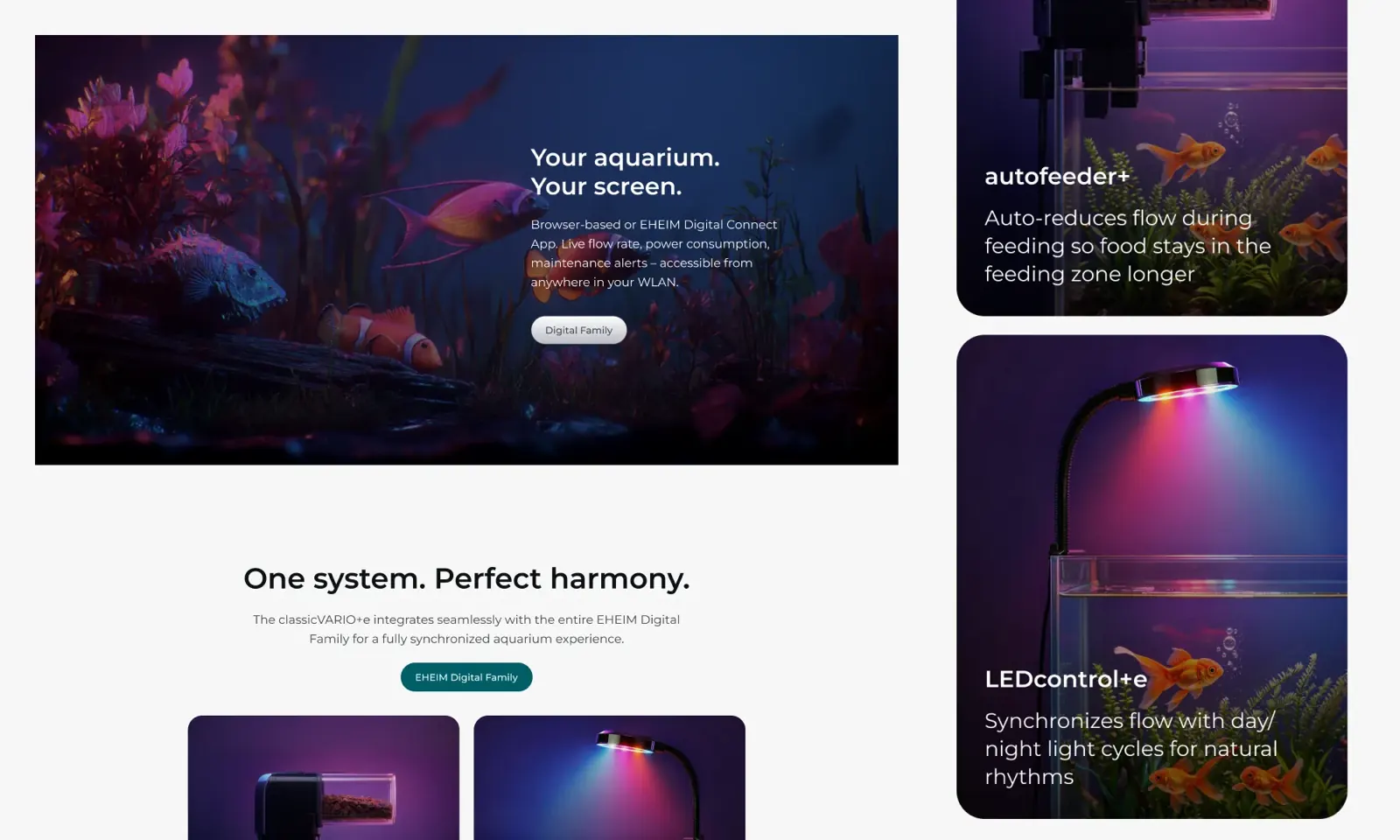
Eheim. Aquarium equipment manufacturer with a deep technical catalogue (filters, heaters, lighting, pumps) sold through specialist retailers and a B2C ecommerce store. Before: a brochure site organised by internal product code, with hobbyist-grade copy and zero schema. After: shop-by-tank-setup taxonomy, technical specs above the fold on every product page, AEO-ready FAQ blocks, and a distributor finder that pulls from the live partner database. Time to ship: 10 weeks.

Site that hasn't earned a lead in two years?
We run a paid 2-week audit, then ship a redesign in 8 to 14 weeks. Job-based taxonomy, AI-readable schema, and a path to quote that actually works.
Realistic timeline and scope
The honest range for a full manufacturer website redesign is 8 to 14 weeks. Below 8 weeks you are skipping discovery or shipping templated work. Above 14 weeks, the project is bleeding momentum and the manufacturer is changing requirements faster than the team can ship.
Weeks 1 to 2: Audit and discovery. Analytics review, competitor matrix, buyer interviews (4 to 8), search-term log analysis. Output is a positioning brief and a job-to-be-done taxonomy. If you skipped a digital presence check before this, bake it in here.
Weeks 3 to 4: Information architecture and design system. Sitemap, page-type templates, brand voice doc, design tokens. Sign-off from sales, marketing, and product together. No going back after this.
Weeks 5 to 8: Build. Product pages, content pages, schema, search, dealer finder, RFQ flow, chatbot integration. AI-assisted on copy drafts and schema generation, human-led on UX and IA.
Weeks 9 to 11: Content migration and SKU rollout. First 100 SKUs ship. Process documented so the manufacturer's team can ship the remainder.
Weeks 12 to 14: QA, soft launch, tune. Cross-browser, mobile, accessibility, schema validation, Core Web Vitals. Soft launch on a subdomain or staged URL. Two weeks of analytics-led tuning before full launch.
Scope creep is the killer. Lock the scope in week 2, ship in week 14, then start a phase 2 backlog for everything that came up in between.
FAQ
How much does a manufacturer website redesign cost? The honest range we quote in 2026 is $35,000 to $120,000 depending on SKU count, integrations (CRM, ERP, dealer table), language coverage, and chatbot scope. Below $35,000 you are buying a template. Above $120,000 you are paying for complexity that may not earn its keep - challenge the scope first.
Can we just use Webflow or Framer with AI tools and skip an agency? For a 5-page company site, yes. For a manufacturer with 100+ SKUs, distributor logic, and multi-language, the tooling is fine but the work that fails without senior input - IA, conversion, brand voice, edge-case UX - is the work the agency exists for. Tooling is not the bottleneck.
What about SEO and the new AI search engines? Schema is the foundation. Product, Organization, FAQ, BreadcrumbList, HowTo where relevant. Without schema, ChatGPT search and Perplexity cannot pull your data. With schema, your products show up in AI-generated buyer responses. We bake this in to every rebuild.
Do we need to migrate all content at once? No. The first 100 SKUs ship in the build. The remainder migrate in weeks 9 to 11 using a process the manufacturer's team can run. Phased migration is normal and reduces risk.
How long before the redesigned site shows results in leads? 6 to 12 weeks post-launch is the realistic window. Schema and Core Web Vitals improvements show in search within 4 to 6 weeks. Conversion improvements from the new RFQ flow show in week 1. Total pipeline impact is usually visible in the first quarter after launch.
What happens after launch? A retainer or a defined backlog. The site needs SKU additions, seasonal campaigns, content updates, and quarterly conversion reviews. Manufacturers who treat the site as a one-off slip back to 2014 within 3 years. Treat it as a product, not a project.
Related reading
For the full Dnipro Contact case study, see digital brand launch for manufacturers. If you are not sure your current site warrants a full rebuild, our digital presence check for manufacturers is the right starting point. And if your redesign needs to ship AI-ready product pages from day one, we cover that in our piece on AI-ready product pages (linked from the for-manufacturers index at cinnaboner.com/for-manufacturers/).
Ship a manufacturer site that converts.
Book a 30-minute call. We'll audit your current site live, name the three biggest leaks, and quote a rebuild if the math works.