Key takeaway: Manufacturers know what to fix digitally — the real problem is prioritisation. An ICE-scored action list ranks every task by impact, confidence, and ease so you start with the moves that actually shift revenue.
The problem most manufacturers face isn't knowing what needs to improve. Ask a founder who's been selling on Etsy for four years what they should be doing digitally, and they'll give you a list: fix the website, post more on social, get more reviews, run some ads, maybe start a blog. The list is usually right.
The problem is order. Doing all of those things costs real money and real hours. Doing the wrong ones first wastes both. A manufacturer who spends three months building an Instagram following before fixing a 47/100 mobile PageSpeed score is investing in the top of the funnel while leaking conversions at the bottom.
Prioritisation is the actual skill. And it requires knowing three things about every action: how much it will move your specific numbers, how confident you can be it will work for your business, and how much effort it realistically takes.
How ICE Scoring Works for Physical Product Businesses
ICE stands for Impact, Confidence, Ease. Each action in a growth plan gets scored 1 to 10 on each dimension, and the average of the three becomes its priority rank.
Impact asks: how much will this move the needle on the metric that matters most right now? For a manufacturer at Stage 1 — a basic Etsy presence and no standalone website — fixing Core Web Vitals has low impact because there's no owned site to fix yet. Getting listed on Faire has very high impact because it opens a wholesale channel immediately. The same action scores differently depending on where you are.
Confidence asks: how certain are we this will work for this specific business? An action that's high-impact in theory but requires data you don't have, or a skill you'd need to hire for, scores lower on Confidence until those gaps are addressed. A manufacturer with 400 Etsy reviews can generate a named case study from existing buyer feedback quickly and confidently. A manufacturer with 12 reviews needs to build that social proof before the case study is worth creating.
Ease asks: how much time and money does this require given your current capacity and budget? Adding schema markup to a WordPress product page takes 20 minutes with a free plugin. Building a content cluster of ten articles takes six weeks. Both have high impact. Ease determines which you do first.
ICE scoring stops the common pattern of manufacturers defaulting to whichever task feels most visible — usually social media — while deferring the technical fixes that would immediately improve search ranking and conversion rate.
What the First Ten Quick Wins Look Like for a Manufacturer
Quick wins are actions scoring above 7.5 on average across Impact, Confidence, and Ease. For most manufacturer sites we've audited, the first ten fall into three categories.
Technical fixes that take under two hours each. Adding meta descriptions to product pages. Converting hero images to WebP format. Deferring render-blocking JavaScript. Adding Organisation and Product schema markup. These score high on all three ICE dimensions — significant SEO and performance impact, high confidence they work, minimal effort. They don't require a developer for sites on standard CMS platforms.
Content that turns existing proof into rankable assets. If you have a client who achieved a measurable result using your product, that result is sitting as an unindexed fact in someone's inbox. A 600-word case study page with the client name, the problem, the outcome, and proper Article schema converts that fact into a GEO-eligible, E-E-A-T-building page that compounds in search over time. For manufacturers with several such outcomes, three to five case study pages represent the highest-leverage content investment available.
Channel presence that verifies the senior-only claim. A LinkedIn company page with a complete profile and two posts per week costs nothing except two hours to set up and 30 minutes a week to maintain. For B2B buyers evaluating a wholesale supplier, a visible LinkedIn presence with production content reduces friction at the point where they're deciding whether to reach out. Zero LinkedIn presence in 2026 raises a flag that doesn't need to be there.
The 90-Day Structure
Beyond the quick wins, a 90-day plan for a physical product business follows a consistent sequence: foundation first, then distribution, then amplification.
Month 1 — Foundation. Technical fixes, schema markup, case study pages, Google Search Console setup, and email capture in place. No new spend until these are done. Every pound spent on ads before fixing a 47/100 mobile PageSpeed score is wasted — you're driving traffic to a leaking bucket.
Month 2 — Distribution. Content published and indexed, social presence active on two platforms, wholesale marketplace listings (Faire, Amazon Handmade) submitted or optimised, email nurture sequence live. The foundation is now worth distributing.
Month 3 — Amplification. Paid campaigns with a real baseline to optimise against. LinkedIn outreach to the wholesale buyers your content has attracted. GEO-optimised long-form content targeting the specific queries AI search tools surface for your product category. A referral programme for past retail buyers.
The sequence matters. Manufacturers who skip to Month 3 tactics without completing Month 1 foundations spend money accelerating a broken system.
What Most Manufacturers Skip — and Why
Two categories consistently appear in the Strategic Bets tier of manufacturer action plans — high-impact but deferred because the effort feels abstract or the payoff feels distant.
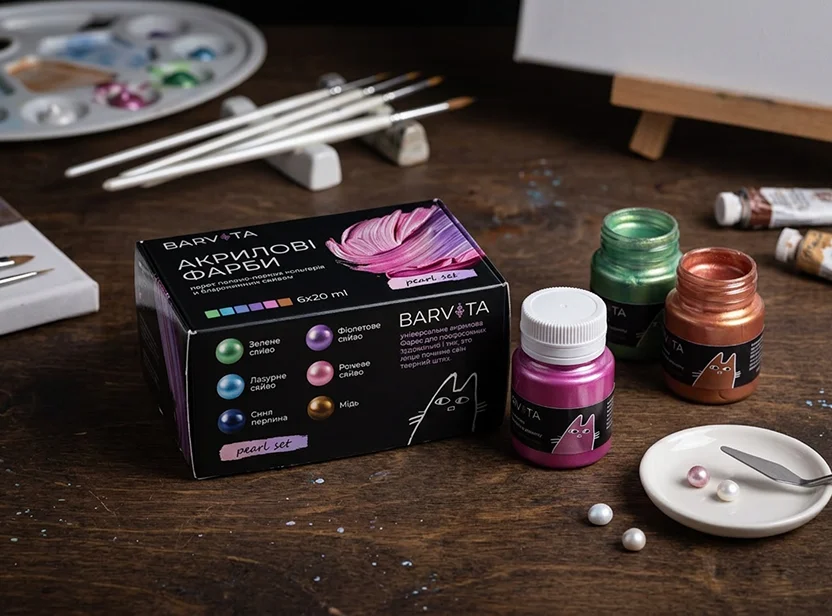
GEO-optimised content. Generative Engine Optimisation means creating content structured to be cited by AI search tools — Perplexity, ChatGPT browsing, Google AI Overviews. This requires specific things: FAQ schema on product pages, original data or claims with numbers, named author markup, and long-form content that answers detailed questions about your product category. A paint manufacturer who publishes a 2,000-word guide to lightfastness ratings — with specific data, a named author, and FAQ schema — becomes the source AI tools cite when a buyer asks "which acrylic paints have the best lightfastness." That citation is free, permanent, and compounds.
Wholesale outreach infrastructure. Most manufacturers wait for wholesale buyers to find them. The manufacturers growing fastest build the outreach infrastructure first: a prospect list of 50 relevant retailers or distributors, a personalised email sequence referencing their specific product context, and a follow-up cadence. The tools for this — Apollo.io for prospecting, Hunter.io for email verification, Instantly.ai for sequencing — are available for under £100/month combined. The manufacturers deferring this are leaving the highest-value channel unpursued while optimising for organic traffic that takes months to build.
Generating Your List in 90 Seconds
AI Business Analyst applies ICE scoring to your specific business. Paste your URL. The tool audits your site, benchmarks five competitors, and generates 50 action items ranked by their ICE score — each one referencing actual data from your site rather than generic best-practice advice.
The output separates into Quick Wins (complete within 7 days), Core Initiatives (complete within 30 days), and Strategic Bets (plan for 90 days). Every item includes a "why it matters" note specific to your business and a step-by-step guide for executing it.
The report downloads as a Markdown file. Open it in Notion, paste it into a project management tool, or hand it to a developer as a brief. No login, no waiting, no generic advice.
For a manufacturer who wants a clear answer to "what should I do next and in what order," it's a useful 90 seconds.
Get your 50-point action plan
Book a discovery call — we'll audit your site and walk you through a prioritised action plan specific to your business.
When 50 Actions Isn't Enough
The action plan tells you what to do. Doing it is a different problem — especially for manufacturers running production operations alongside digital growth work.
For businesses that want to move faster than their internal capacity allows, Cinnaboner takes items from the plan and executes them. Strategy through launch, no juniors, no handoffs. The same senior team handles the schema markup, the case study pages, the wholesale outreach infrastructure, and the paid campaign setup — without the coordination overhead of managing three separate agencies.
The plan is a starting point either way. Whether you execute it yourself, hand it to a freelancer, or work with us — you're working from a prioritised list built on your actual data, not a generic SEO checklist that applies equally to every business.
Stop guessing. Start with your list.
Book a discovery call — we'll walk you through 50 ICE-scored actions ranked for your specific business.
Get your action plan to grow your product brand.
Book a discovery call — we'll give you a full picture of where your brand stands: competitor benchmarks, digital health, and 50 prioritised actions specific to your business.